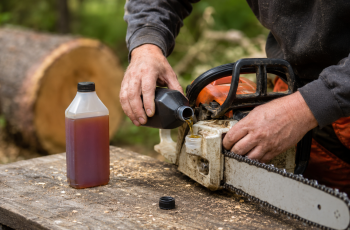
A portable sawmill left unprepared for cold weather is prone to hydraulic and engine problems, blade brittleness, and accelerated wear — winterizing before the first hard freeze prevents most of these rather than dealing with them as breakdowns mid-winter.

Engine and Fuel System
Gasoline degrades over storage time and can gum up a carburetor; running a fuel stabilizer through the tank before an extended winter idle period, or draining the tank entirely for long-term storage, prevents starting problems in spring. Engine oil should be checked against the manufacturer’s cold-weather viscosity recommendation, since oil that’s too thick for the temperature makes cold starts harder on the engine.
Hydraulic Systems
Hydraulic fluid thickens in cold temperatures, which can strain pumps and reduce system responsiveness; a cold-weather-rated hydraulic fluid, if the mill’s operating temperature range calls for it, prevents this. Hoses and seals should be inspected for cracking, since cold makes existing rubber degradation significantly more likely to fail outright.
Blade Care
The same bandsaw blades become more brittle in cold temperatures and are more prone to cracking under the same tension and stress that wouldn’t be a problem in warmer conditions. Storing blades indoors at a moderate temperature, and allowing a cold-stored blade to warm up before use rather than immediately putting it under full tension and load, reduces this risk.
Work Area Considerations
Where feasible, basic wind protection and some heating in the immediate work area both protect equipment from the harshest temperature swings and make the operator’s job safer — cold-weather injuries and reduced dexterity handling equipment are real safety factors, not just a comfort issue. A snow and ice removal plan for the mill’s operating area and material staging prevents both slip hazards and snow load issues on any temporary structures.
Wood Handling in Cold Weather
Frozen logs cut differently than unfrozen ones — frozen wood is harder and can be more brittle, sometimes affecting cut quality and increasing blade wear. Where possible, allowing logs to partially thaw or accounting for the harder cutting conditions in blade tension and feed rate reduces both premature blade wear and rough cut surfaces.
Why Ethanol Fuel Is the Real Culprit Behind Spring Starting Problems
The fuel-stabilizer advice above solves a specific chemistry problem worth understanding. Per Oklahoma State University Extension, ethanol in standard gasoline is hygroscopic — it attracts and absorbs moisture from the air. At low water concentrations the ethanol carries that water through the engine harmlessly as fuel burns, but past a threshold the water separates out and pools at the bottom of the tank, a process called phase separation that leads directly to rust and engine damage over a long winter idle. Their guidance: use fuel within 30 days of purchase where possible, and either store a small engine completely empty in a dry place or completely full to minimize the air space condensation forms in.
Ethanol-free gasoline, where available, sidesteps the problem entirely and costs only marginally more — worth considering for a mill that sits idle for months at a stretch rather than one running weekly. Either way, the core lesson holds: it’s not cold temperature alone causing spring starting problems, it’s months-old ethanol fuel that absorbed moisture the whole time it sat.
Conclusion
Winterizing a lumber mill is mostly preventive maintenance applied before cold weather arrives rather than after problems appear — fuel and oil prep, hydraulic fluid appropriate to the temperature range, careful blade handling, and a safe, ice-managed work area cover most of what determines whether a mill keeps running reliably through winter.