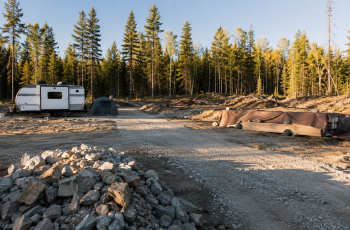
A portable winch (a self-contained pulling unit, gas or electric powered, distinct from a stationary vehicle-mounted winch) provides active pulling force for moving felled logs across an off-grid property without requiring a tractor or ATV to physically drag the load — useful both for getting a log out of the woods and for positioning it on a sawmill bed once it’s there.

Capacity and Sizing
Portable capstan winches (which pull cable through a rotating drum rather than spooling it, allowing effectively unlimited cable length) are commonly rated from roughly 2,000 lbs up to 4,000+ lbs of line pull. Rated capacity should exceed the heaviest anticipated log weight by a meaningful safety margin, not just match it — a winch working at its absolute rated limit has little tolerance for the added resistance of rough terrain, uphill pulls, or a log catching on an obstacle mid-pull.
Power Source
Gas-powered portable winches run independent of any other power source, an advantage for remote work far from a charging setup. Electric models (often battery or vehicle-powered) run quieter and need less maintenance but depend on adequate battery capacity or a nearby power source for extended use, which matters on a property already managing limited off-grid power generation.
Anchoring
The winch itself needs to be anchored to something capable of resisting the full pulling force — a mature standing tree, a vehicle, or a purpose-built ground anchor. An inadequately anchored winch can shift or fail under load, which is both ineffective and a real safety hazard given the stored energy in a taut cable under tension.
Combining With a Skidding Cone
A skidding cone attached to the log’s leading end reduces the drag force the winch has to overcome, meaningfully extending what a given winch can handle and reducing wear on both the winch and the cable over repeated pulls.
Safety
A cable under load stores significant energy, and a snapped cable or a failed anchor point can release that energy suddenly and dangerously. Standing well clear of the cable’s direct line during a pull, using a cable dampener to absorb energy in the event of a snap, and never exceeding rated capacity are baseline safety practices, not optional precautions for experienced users only.
The “Clear Before It Moves” Rule
The safety practices above come from the same standard commercial logging operations are held to, and one rule from it is worth adopting on any off-grid property doing its own log work with a portable winch: per OSHA’s logging safety standard (29 CFR 1910.266(h)(5)(i)), no log is moved until every person is confirmed clear — not just clear of the log’s path, but clear of where a snapping cable could travel if it fails under tension. A cable that lets go under load doesn’t just drop; it can whip back through the full length it was stretched, which is exactly why standing directly in line with a taut cable is one of the more dangerous habits a beginner can pick up without realizing it.
In practice, that means a firm habit of a visual and verbal all-clear before engaging the winch every single pull, not just on the first one of the day — the same discipline that matters whether it’s a portable winch pulling a log or a tractor doing the same job on a larger property.
Conclusion
A portable winch extends what’s practical to move on rough or remote terrain without heavier equipment, but capacity sizing with real margin, proper anchoring, and cable-safety discipline determine whether it’s a genuinely useful tool or a real hazard on the property.