Off-grid living is often associated with acreage, but food self-sufficiency can start on a balcony, patio, or windowsill. Container gardening produces a meaningful share of a household’s produce even without any land ownership, and it teaches the same skills — soil management, watering discipline, pest control — needed for a full-scale garden later.
Site Selection
Most fruiting vegetables (tomatoes, peppers) need at least 6 hours of direct sun daily; leafy greens and herbs can produce with as little as 3-4 hours, which makes them a better fit for partially shaded balconies or north-facing windows. A south-facing exposure in the Northern Hemisphere gets the most consistent light through the growing season.
- Balcony or porch — container gardening, typically 6-10 sq ft of usable growing space per 5-gallon container arrangement.
- Patio or driveway — raised beds or grow bags; a standard 4×8 ft raised bed yields roughly 32-64 sq ft of planting area.
- Windowsill — herbs and microgreens; most herbs need 4+ hours of direct light or a supplemental grow light.
- Community garden plots — typically run $20-75/year through city parks departments or nonprofit land trusts.
Crop Selection by Time to Harvest
For a first season, crops with short days-to-harvest reduce the chance of a full crop failure from a single mistake:
- Radishes — 25-30 days
- Lettuce and salad greens — 30-45 days
- Spinach — 40-45 days
- Bush beans — 50-55 days
- Cherry tomatoes — 60-70 days from transplant
- Kale — 55-65 days, but individual leaves can be harvested earlier
Starting with 3-5 of these rather than a full mixed bed keeps the workload manageable and gives faster feedback on what a given space can support.
Containers and Soil
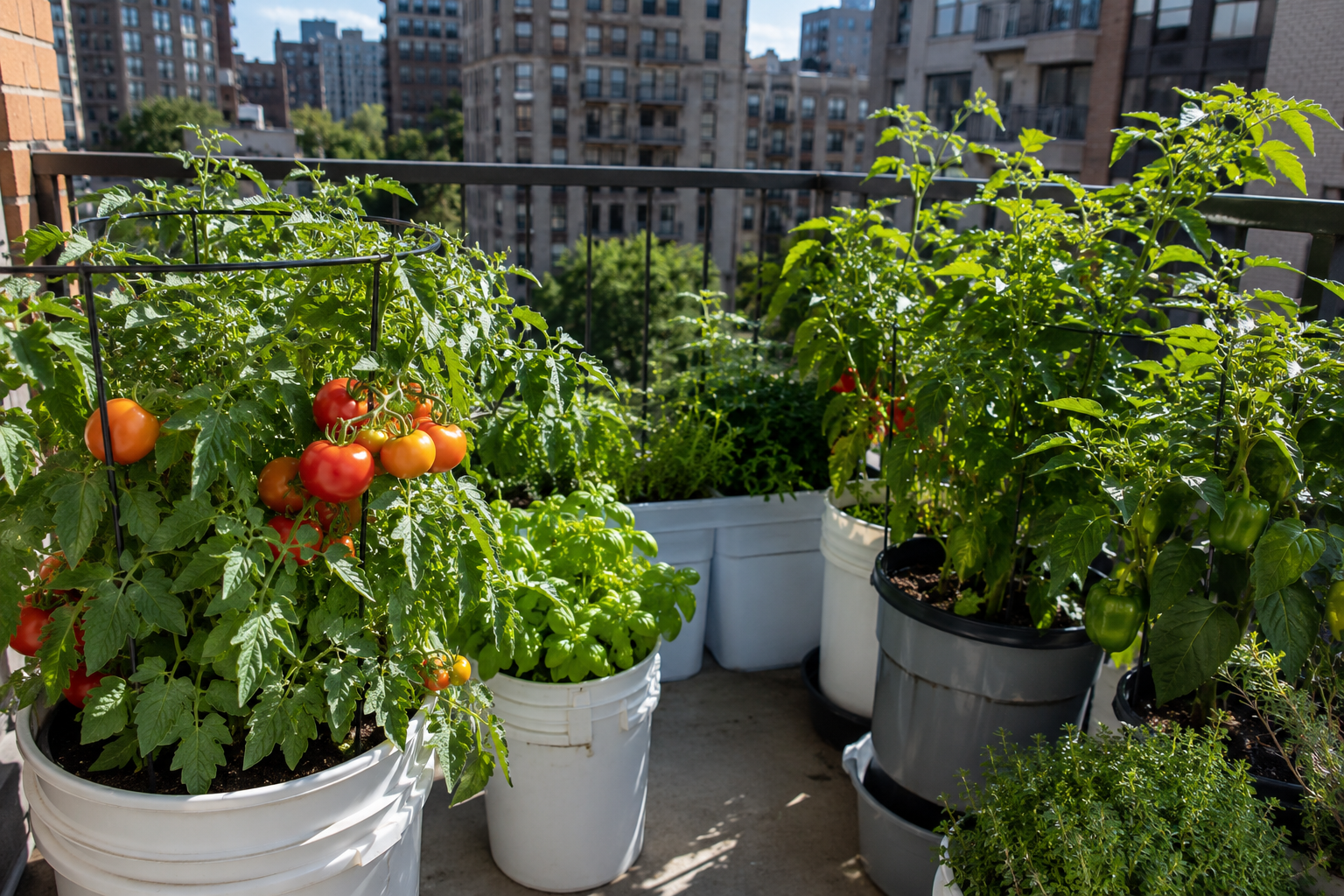
Container size matters more than most guides suggest: a 5-gallon bucket supports one tomato or pepper plant; a 3-gallon container is the minimum for most root vegetables; herbs can share a container as small as 1 gallon. All containers need drainage holes — without them, root rot is close to guaranteed after a heavy watering.
Garden soil from a yard is a poor substitute for potting mix in containers — it compacts and drains poorly once confined. A blend of roughly two-thirds potting soil to one-third finished compost gives most vegetables adequate nutrition for 6-8 weeks before supplemental feeding is needed. Kitchen scraps (vegetable peels, coffee grounds, eggshells) can be composted directly for that supplement, though a full compost cycle typically takes 2-6 months depending on method and climate.
Watering
Containers dry out faster than ground soil because they have less thermal mass and more exposed surface area. Watering in early morning reduces evaporation loss compared to midday watering, and a simple finger test — dry past the first knuckle means it’s time to water — is more reliable than a fixed schedule, since need varies with temperature and container material (unglazed terracotta dries faster than plastic). A 2-3 inch layer of mulch (straw, shredded leaves, or wood chips) measurably slows moisture loss between waterings.
Self-Watering Containers Solve a Different Problem Than People Expect
For anyone away from the containers for stretches at a time — a real constraint for a lot of people practicing these skills before actually living off-grid full-time — a self-watering container is worth the extra setup. Per University of Maryland Extension, these work by growing roots down into a water reservoir beneath a perforated platform, wicking moisture up into the growing medium as needed. It’s a common misconception that this eliminates watering entirely — in summer conditions the reservoir itself still needs 1-2 quarts refilled daily — but it does let a container go a few days unattended without the finger-test watering routine described above, which matters for anyone testing off-grid skills around a job or travel schedule.
The tradeoff is upfront complexity: building or buying a reservoir system costs more time and materials than a plain container with drainage holes. For a first season focused on learning the basics, a standard container is the simpler starting point; self-watering setups earn their keep once the growing routine is established and the actual constraint becomes time, not knowledge.
Conclusion
A small, well-managed container garden teaches the core skills — soil, water, timing, crop selection — that scale directly to a larger homestead garden later. Starting with a handful of fast, forgiving crops in properly sized containers builds both food output and practical experience faster than an ambitious first-season plan that’s more likely to fail outright.