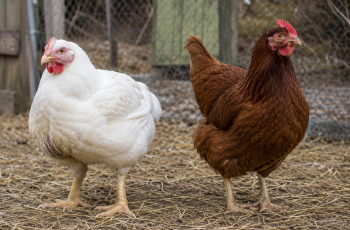
Permaculture is a design approach for gardens and small farms that works with natural ecosystem patterns rather than against them, aiming for a system that becomes more self-sustaining over time instead of requiring constant intervention.
1. Zone Planning
Placing elements by how often they need attention — herbs and salad greens visited daily go closest to the house (Zone 1), while less-tended orchards or woodlots sit further out (Zone 3-4, a natural fit for the perennial layer discussed in a small off-grid garden too) — reduces the daily walking distance and effort required to maintain the highest-touch areas.
2. Companion Planting
Certain plant combinations benefit each other — the “Three Sisters” planting (corn, beans, and squash) is a well-documented example: corn provides a climbing structure for beans, beans fix nitrogen in the soil that corn depletes, and squash’s broad leaves shade out weeds and retain soil moisture for both. Not all companion planting claims are equally well-supported by evidence, so relying on well-documented combinations rather than folklore-level claims produces more consistent results.
3. Water Conservation
Swales (shallow, level contour ditches) slow and redirect rainwater runoff into the soil rather than letting it drain away, and mulching reduces evaporation from exposed soil significantly compared to bare beds. Both reduce irrigation need, which matters more on an off-grid property where stored harvests and water are both managed, finite resources rather than an unlimited utility.
4. Natural Pest Management
Encouraging predator insects (ladybugs, lacewings) and birds, along with diverse plantings that make it harder for a single pest species to dominate, reduces reliance on chemical pest control. This isn’t a complete substitute for pest management in all situations, but it meaningfully reduces the baseline pest pressure a garden faces.
5. Vertical Gardening
Trellising vining crops (beans, cucumbers, some squash varieties) increases usable growing area within a given footprint, which matters most on smaller properties or in garden zones with limited space.
6. Soil Building
Compost, cover cropping, and minimizing tillage build soil organic matter and microbial life over time rather than depleting it season over season, which is the difference between a garden that needs increasing inputs over time and one that becomes more productive with less input as the soil matures.
7. Perennial Integration
Fruit trees, berry bushes, and perennial herbs require less annual replanting effort than a garden rebuilt from seed every season, and they build a more stable, layered ecosystem over multiple years — at the cost of a multi-year wait before reaching full production, which is why they’re typically planted early and allowed to mature alongside annual crops rather than after.
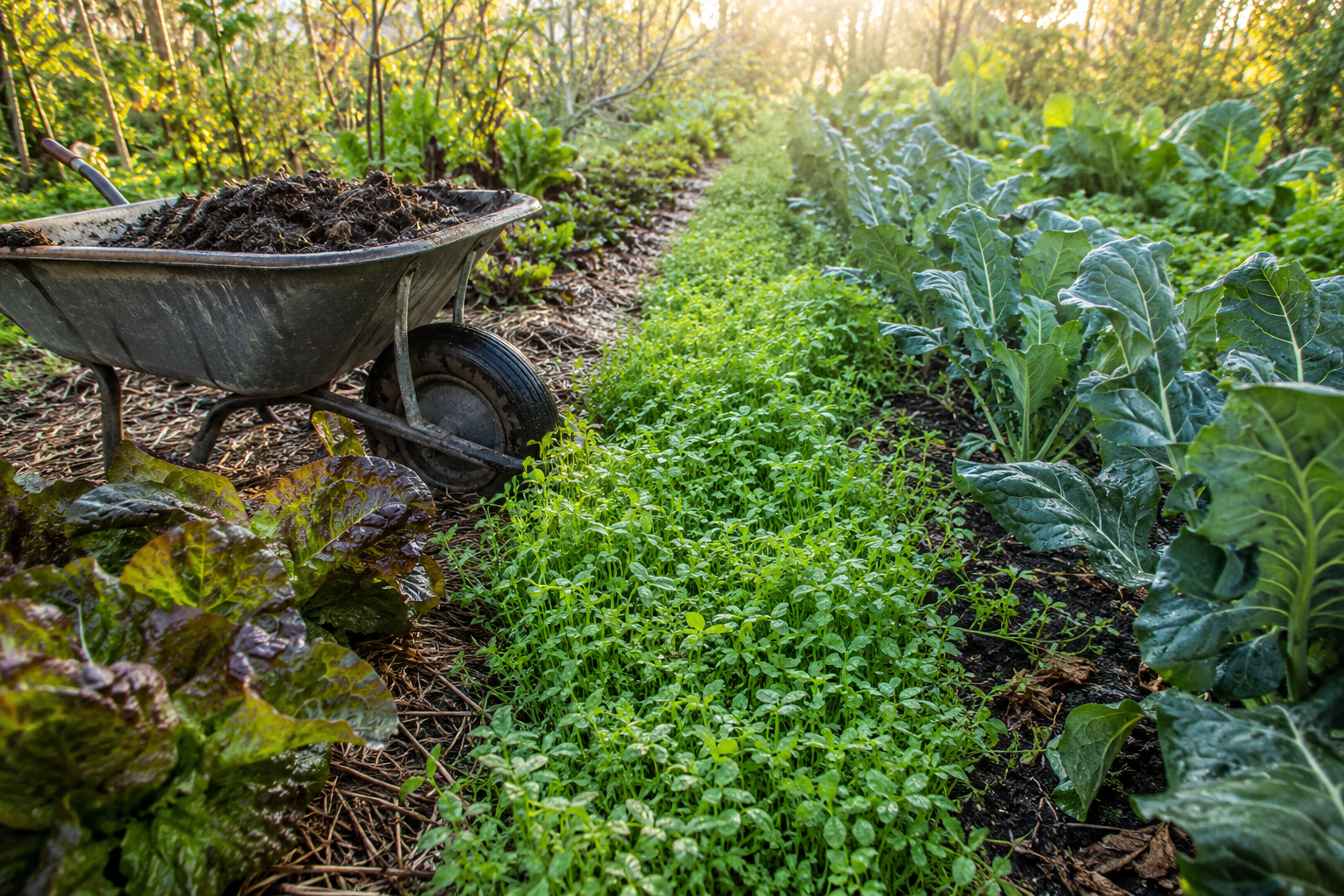
What Cover Cropping Actually Does to the Soil
The soil-building principle above is backed by real measured numbers, not just a general sense that compost and cover crops “help.” Per SARE (Sustainable Agriculture Research and Education), legume cover crops have been measured to increase soil organic matter by 8% to 114%, while non-legume cover crops like grasses and brassicas increase it by 4% to 62%. Cover crops build organic matter through three mechanisms: protecting the soil surface from erosion, adding biomass below the surface as roots break down, and creating habitat for the soil microorganisms that keep nutrients cycling. That range is wide because starting soil condition, cover crop species, and how long a plot has been under cover cropping all matter — but the direction is consistent and well-documented, not folklore.
Combined with the compost most homesteads already generate from kitchen scraps and chicken bedding, a rotation of legume cover crops between growing seasons compounds the soil-building effect described in principle 6 above, and it’s one of the cheapest inputs in a permaculture system since the “cost” is mostly a season of bed space rather than any purchased material.
Conclusion
These seven principles work together rather than independently — zone planning determines where the other six get applied, and water conservation, soil building, and perennial integration all compound over multiple seasons rather than delivering their full benefit immediately.