Off-grid living depends less on location than on preparedness — the ability to handle fire, water, food, shelter, navigation, and injury without relying on modern infrastructure. Each of the following skills can be learned incrementally, in a backyard or on a weekend trip, well before a full off-grid move.
Fire-Making Without Matches or Lighters
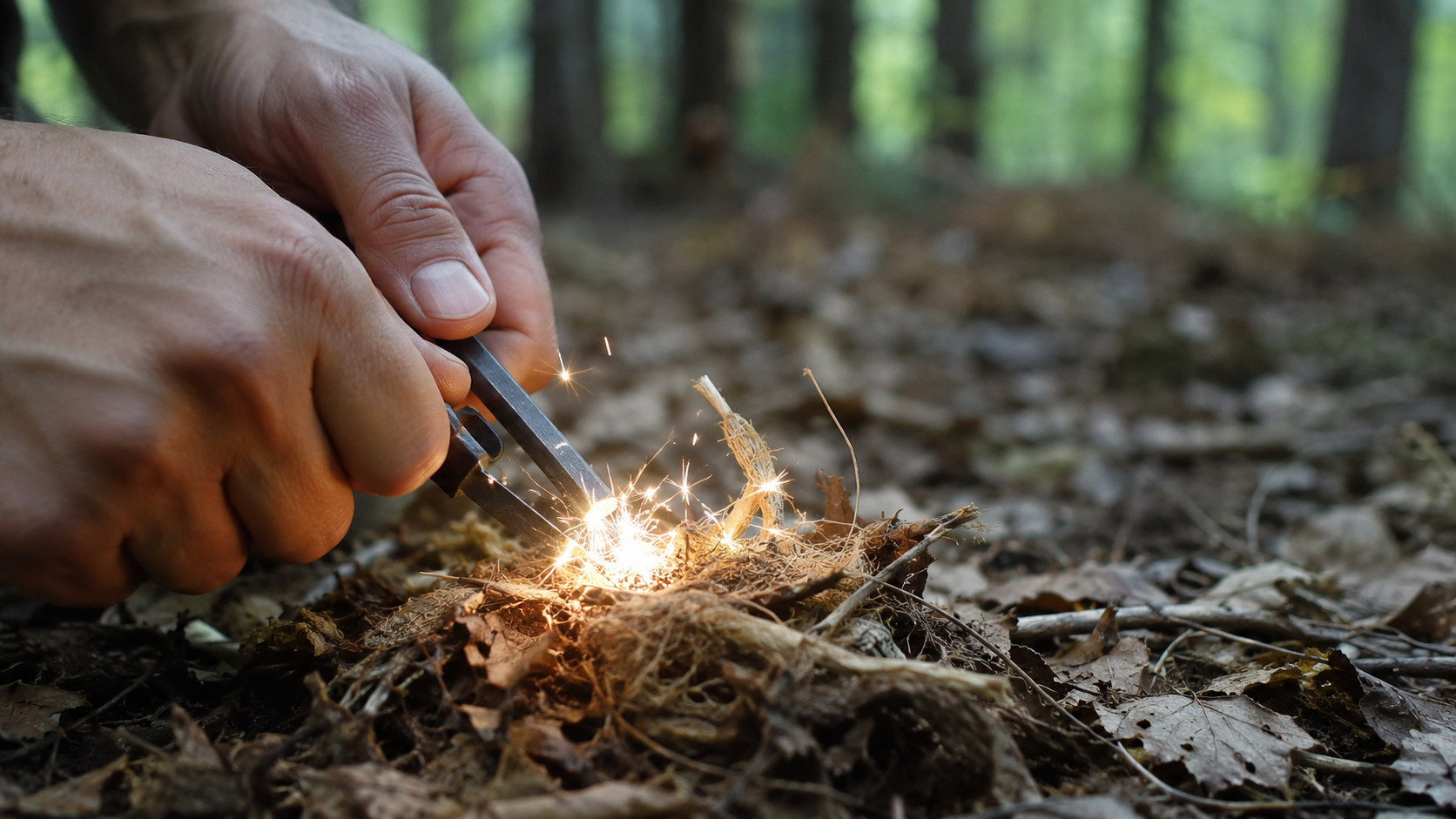
A ferro rod throws sparks at roughly 3,000°F, hot enough to ignite fine, dry tinder (birch bark, dry grass, or processed fatwood) on contact — far more reliable in wet or windy conditions than matches. Flint and steel works on the same principle but requires char cloth or another highly receptive tinder to catch a spark reliably. Building distinct fire types matters: a teepee fire lights fast for quick warmth, while a log cabin fire burns longer and more steadily for cooking.
Water Sourcing and Purification
A rolling boil for one minute (three at elevations above 6,500 feet) kills bacteria, viruses, and parasites including Giardia and Cryptosporidium, per CDC guidance. A portable filter rated at 0.2 microns or smaller removes bacteria and protozoa; UV purifiers and chemical tablets are viable backups but each has a specific failure mode (UV needs power and clear water; chemical treatment needs contact time, typically 30 minutes, to fully work). Boiling and filtering are last-resort emergency methods, not a long-term substitute for the collection systems covered in the off-grid water collection guide.
Foraging Wild Edibles
Positive identification is the only safe method — there is no reliable universal test for whether a wild plant is edible, and several deadly plants (water hemlock, death cap mushrooms) closely resemble edible look-alikes. A region-specific field guide, cross-checked against multiple identifying features (leaf shape, growth pattern, smell, habitat), is the standard approach; guessing based on a single feature is how foraging poisonings happen.
Basic Shelter-Building
Hypothermia can set in at temperatures well above freezing when wind and wet conditions strip body heat faster than it can be replaced, which makes shelter a higher near-term priority than food in an emergency. A debris hut — a ridge pole with a thick layer of leaves, branches, and insulating material piled over it — can be built in under two hours with no tools and provides meaningful insulation from both ground and air. Site selection (elevated, away from dead standing trees, sheltered from prevailing wind) matters as much as construction technique.
Navigation Without GPS
A topographic map paired with a baseplate compass remains functional with no batteries and no signal. Basic orienteering — taking a bearing, accounting for magnetic declination (which varies by region and can exceed 15° in parts of the US), and pace counting for distance — is a learnable skill, not innate. In a pinch, a shadow-tip method using a stick and the sun’s movement can establish rough east-west orientation within about 15 minutes.
First Aid and Medical Basics
A Red Cross or equivalent basic first aid and CPR certification (typically a single-day course) covers the highest-frequency injuries in a rural or off-grid setting: cuts, burns, sprains, and fractures. A stocked first aid kit and the knowledge to use it matters more than kit size — direct pressure and elevation stop the large majority of bleeding without specialized equipment.
Food Preservation
Dehydrating removes enough moisture (typically to below 20% water content) to prevent microbial growth, extending shelf life to a year or more for many fruits and vegetables when stored properly. Fermentation relies on salt concentration (commonly 2-5% by weight for vegetables) to favor beneficial bacteria over spoilage organisms. Canning requires distinguishing low-acid foods, which need pressure canning at 240°F+ to safely kill botulism spores, from high-acid foods, which can be safely water-bath canned — using the wrong method for a low-acid food is the leading cause of home-canning botulism cases, the same real-world stakes covered in more depth in the pressure-canning guide for salmon. A root cellar handles the produce a dehydrator or canner can’t easily take on — root vegetables that store best fresh in cool, humid conditions rather than processed.
Where to Actually Start
Trying to learn all seven skills at once is how this list turns into an intimidating wall rather than a practical plan. Fire-making and water purification carry the highest near-term safety payoff and take the least gear to practice — a ferro rod and a cheap filter, tried a few times in a backyard, cover the two failure modes (no heat, no safe water) most likely to actually happen on a first extended off-grid stay. First aid certification is the next priority specifically because it’s a scheduled, one-day commitment rather than an ongoing practice habit, making it easy to just get done early rather than keep deferring.
Conclusion
These are technical skills with correct and incorrect methods, not general common sense — the difference matters most in exactly the situations where getting it wrong is costly. Practicing each one in a low-stakes setting before it’s actually needed is what turns off-grid living into a manageable transition rather than a gamble.