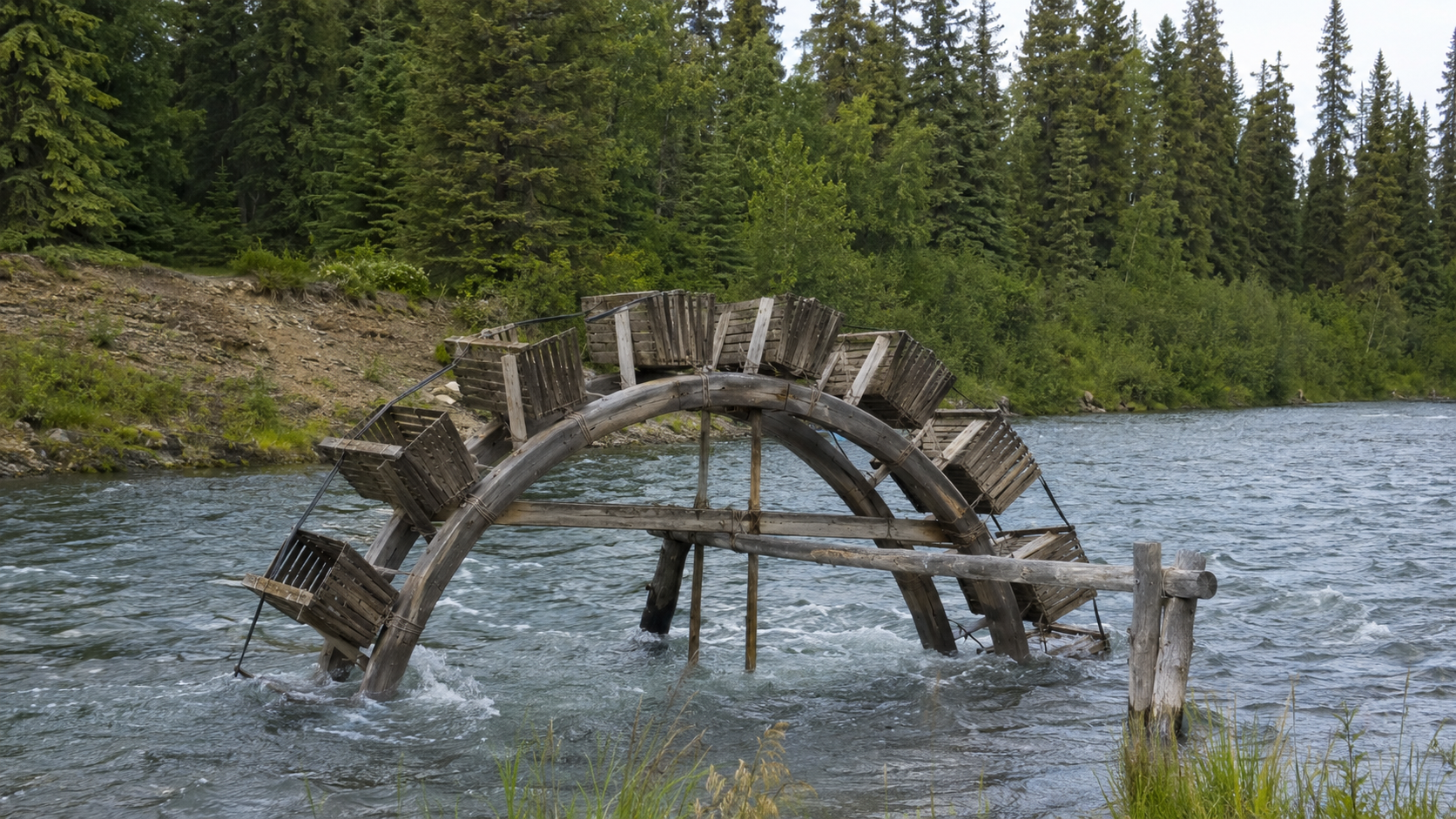
A fish wheel is a current-powered device that scoops fish from a river into a holding basket as it rotates, requiring no fuel or electricity to operate once installed. It’s a traditional method most associated with Alaska’s subsistence and personal-use salmon fisheries, where consistent river current makes the design practical.
Site Selection
A location needs steady current, adequate depth for the wheel to turn without grounding, and a riverbed that can securely anchor the frame. Sites along known salmon migration routes are far more productive than an arbitrary stretch of river, which makes local fishing knowledge or state fish and game data worth consulting before building.
Frame and Wheel Construction
The frame needs to withstand continuous current force plus the weight of the wheel and catch, which typically means treated lumber or a welded metal frame anchored directly to the riverbed with vertical supports for the axle and cross-bracing for stability. The wheel itself should use lightweight, corrosion-resistant material — aluminum is common — since a heavier wheel requires more current force to turn reliably. Baskets need mesh or netting fine enough to hold fish but open enough to let water pass through without excess drag, and should avoid sharp edges that could injure caught fish before release or harvest.
Installation and Testing
Installation involves anchoring the frame to the riverbed, mounting the wheel on the axle so it turns freely and stays balanced, and setting up a collection point for the catch. Testing before leaving the wheel unattended matters — an unbalanced wheel or misaligned basket angle can fail to catch fish effectively or, in current that’s too strong, damage the frame.
Maintenance
Regular inspection matters most after high-water events, which can shift the frame’s anchoring or damage the wheel. Debris clears from baskets and the collection area as part of routine checks, and moving parts benefit from periodic lubrication to reduce wear on the axle.
Legal Requirements
In Alaska, fish wheels are regulated under state subsistence and personal-use fishing rules, and their use is generally restricted to specific rivers and permit holders rather than open to any waterway — the Alaska Department of Fish and Game publishes the current regulations and permit requirements by region, which should be checked before construction, not after. Other states and countries may prohibit fish wheels entirely or regulate them differently; local fish and wildlife authorities are the authoritative source, not general online guides.
Conclusion
A properly built and sited fish wheel can provide a reliable, low-maintenance food source in the right river system — and a real one to plan storage for, since a good season can quickly outpace what fits in a freezer; see the salmon canning guide or the smoking and curing guide for turning a big catch into shelf-stable food. But the permit and regulatory requirements — particularly in Alaska, where use is tightly restricted by location and permit type — matter as much as the construction itself.