Canoe choice comes down to matching hull material and size to intended use — a canoe built for calm-lake day trips handles very differently from one meant for loaded wilderness travel or whitewater. For a property with real water access, a canoe is often the difference between a lake or river being scenery and being a working part of the property — hauling gear, checking traps, or reaching a fishing spot that has no road to it.
Canoe Types by Use
- Recreational canoes — wider, more stable hulls suited to calm lakes and slow rivers; the most forgiving choice for beginners.
- Touring canoes — longer, narrower hulls that track straighter and carry more gear, built for multi-day trips rather than day paddling; this is the category most off-grid homesteaders reach for, including in river-and-lake-heavy regions like off-grid Alaska, where a canoe can be genuine transportation rather than a recreational extra.
- Whitewater canoes — shorter and more maneuverable, with additional flotation and a rockered hull (curved from bow to stern) for handling rapids.
- Racing canoes — narrow, low-volume hulls optimized purely for speed, with minimal stability margin for cargo or rough water.
Materials and Weight
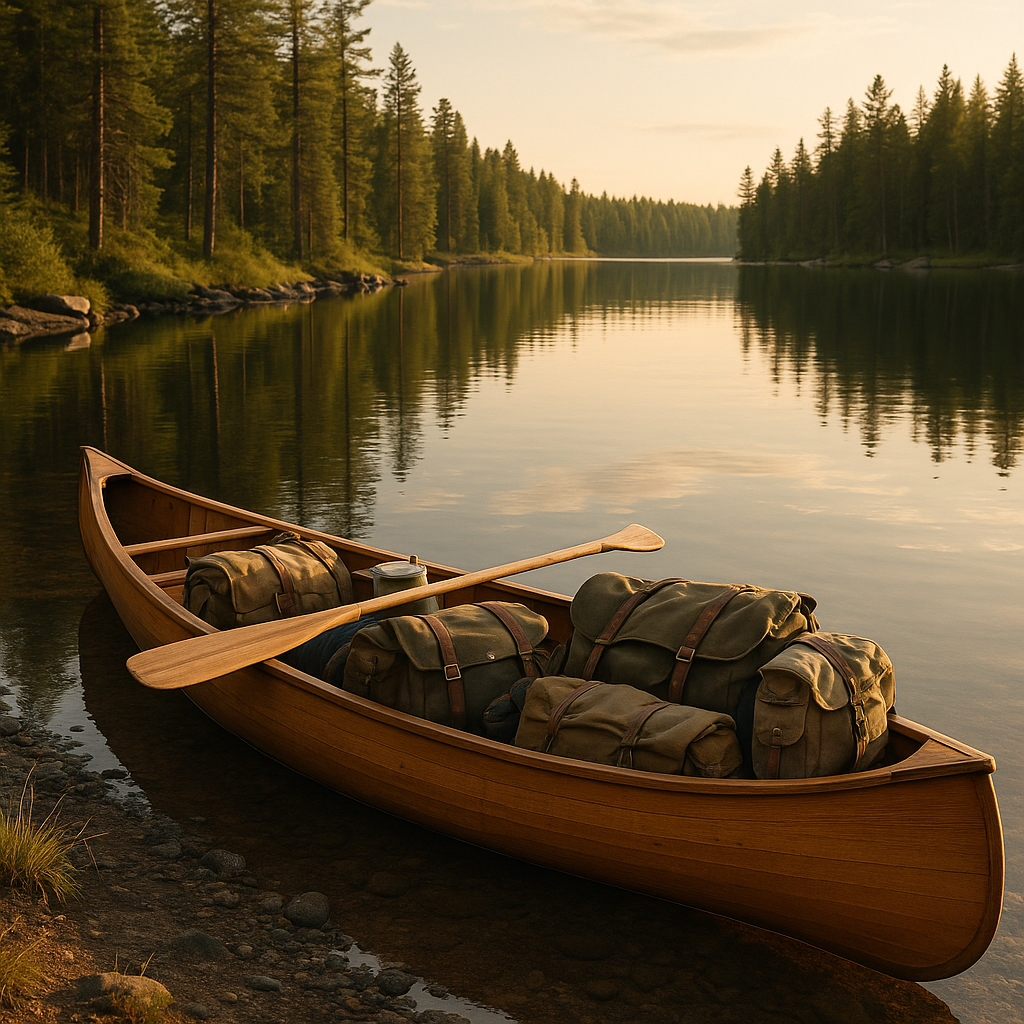
A 16-foot aluminum canoe typically weighs 70-85 lbs, is highly resistant to impact damage, and generally costs the least of the durable options — but the weight makes solo portaging difficult. Polyethylene (plastic) canoes run similarly heavy but cost less than aluminum and handle abrasion from rocky put-ins well, at the cost of more hull flex. Fiberglass canoes cut weight to roughly 55-65 lbs for the same length at a moderate price increase. Kevlar is the lightest common option, often 40-50 lbs for a 16-footer, at a substantially higher price — the weight savings mainly matter for solo paddlers or trips involving significant portaging.
Sizing and Capacity
A 16-foot canoe is the most common general-purpose length, with a typical weight capacity around 700-900 lbs (paddlers plus gear) — enough for two adults with moderate gear for a multi-day trip. Longer canoes (17-18+ feet) track straighter and hold more weight but sacrifice maneuverability; shorter canoes (14-15 feet) maneuver more easily in tight water but carry less and track less true over distance. That capacity matters for subsistence use too — hauling a day’s catch back from a fish wheel or a net site adds real, unpredictable weight on top of the paddler and gear already aboard.
Testing Before Buying
Rental or demo-day test paddling reveals handling characteristics — how a canoe responds to wind, how it tracks, how stable it feels when loaded — that specs alone don’t fully convey. Many outfitters near popular paddling water offer rentals specifically for this kind of comparison before a purchase.
A Quick Capacity Check Before You Load It
Canoes are exempt from the U.S. Coast Guard’s capacity-plate requirement that applies to powered boats under 20 feet, so there’s no manufacturer-stamped number to check against on most used or older canoes. Boater-safety education (boat-ed.com, used for official boating-safety courses) teaches a simple fallback formula for small boats without a plate: (length in feet × width in feet) ÷ 15 = number of people, at an assumed average of 150 lbs each. Run that on a fairly typical 16-foot canoe with a 3-foot beam and it comes out to roughly 3.2 people, or about 480 lbs — noticeably more conservative than the 700-900 lb manufacturer capacity ratings common on 16-footers. The gap is deliberate: manufacturer figures assume calm water and an experienced paddler, while the safety-course formula is built to leave a real margin. For a loaded wilderness or resupply run, planning closer to the conservative number — not the manufacturer maximum — is the difference between adequate freeboard and a canoe riding dangerously low.
Conclusion
Material determines weight and durability trade-offs; length and hull shape determine handling and capacity. Matching both to actual intended use — day trips on calm water versus loaded multi-day travel versus whitewater — matters more than any single spec in isolation. Capacity formula above: Boat-Ed — How to Calculate Boat Capacity.