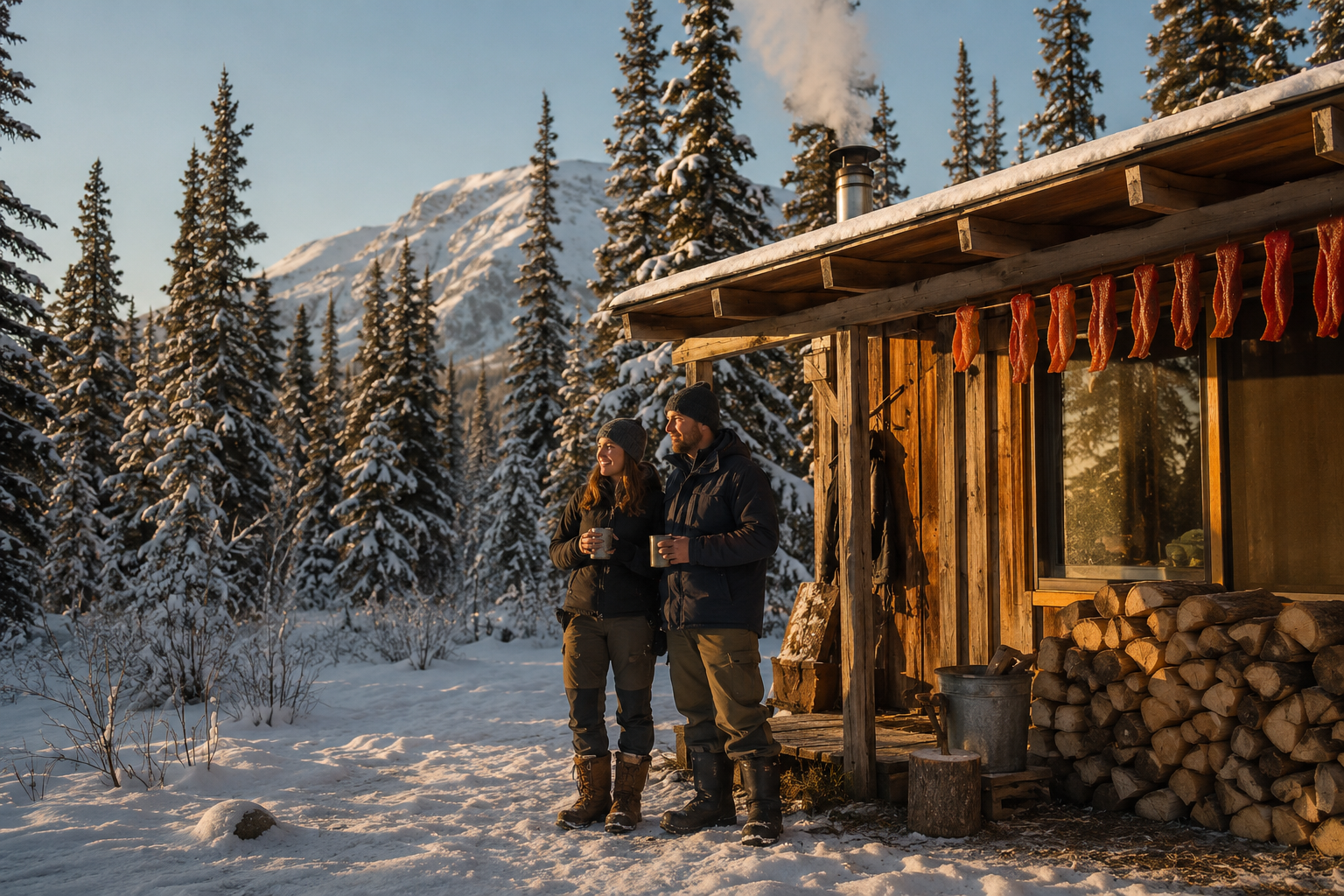
Simple Living Alaska is a YouTube channel following Eric and Arielle’s off-grid homestead in Alaska, documenting the realities of building and maintaining a self-sufficient life in one of the more physically demanding climates for off-grid living in the United States.
Who’s Behind It, and How Big This Channel Actually Is
Eric and Arielle made the roughly 2,500-mile move from Oregon to a tiny cabin in Southcentral Alaska, near Willow, in 2018. What started as downsizing turned into full off-grid living, and the channel has grown into one of the largest homesteading channels on YouTube — over 890,000 subscribers across more than 560 videos as of this writing. That scale matters for anyone using it as a research reference: with that many videos spanning multiple full Alaska years, there’s a genuinely deep back catalog to search for a specific system, season, or problem rather than a handful of highlight reels.
What the Channel Actually Covers
The content splits fairly evenly across a few real categories rather than one narrow niche. Subsistence hunting and fishing is a major thread — black bear and grizzly, caribou, moose, beaver, and ptarmigan on the hunting side, plus Kenai River sockeye, dip-net fishing the Copper River, halibut, and ice fishing on the water side. Food preservation follows directly from that: smoking caribou sausage and salmon, canning meat and produce, rendering pemmican, and a growing sideline in beekeeping and honey harvest that’s unusual for a channel this hunting-heavy. For readers of this site’s own coverage of preserving a harvest, their canning and smoking episodes are a useful visual complement to the written steps in canning salmon for long-term storage and smoking and curing meat.
The other major thread is winter itself — genuinely extreme by Lower 48 standards, with recent videos covering day-to-day life and repairs through a stretch of -60°F cold, firewood processing ahead of the season, and heating a greenhouse through the shoulder months so it isn’t a total loss. Building and shop projects (siding, electrical, soundproofing an outbuilding) round out the channel, along with a full garden and greenhouse tour showing what actually grows in an Alaska zone 1 climate. If moose is on your radar as a food source, their hunts pair well with this site’s own guide to moose hunting techniques, and if fish wheels or dip-net methods come up, see how to build a fish wheel.
Why It’s a Useful Reference
Alaska’s off-grid conditions — extreme seasonal daylight variation, permafrost, remote access — are more extreme than most other U.S. regions, which makes real, ongoing documentation especially valuable compared to general off-grid guides written without a specific climate in mind (covered in more technical detail in this site’s guide to building off-grid in Alaska). Seeing an actual household hunt, smoke, and can enough food to carry through winter, or keep a wood stove-heated greenhouse alive into the shoulder season, fills a gap that a written specifications guide can’t. Alaska’s own food-safety guidance backs up why the canning and smoking steps shown on the channel matter as much as they do: improperly canned or smoked fish and game is one of the state’s recurring sources of botulism risk, and correct processing temperatures and times aren’t optional. Source: University of Alaska Fairbanks Cooperative Extension — Food Preservation.
Conclusion
For anyone specifically considering Alaska or another extreme-climate off-grid location, Simple Living Alaska is a useful real-world complement to the technical guides on this site — not a substitute for region-specific building code, permitting, and food-safety research, but a genuine, extensively documented look at how the lifestyle plays out through a full Alaskan year, from a channel large enough to have covered nearly every season more than once.