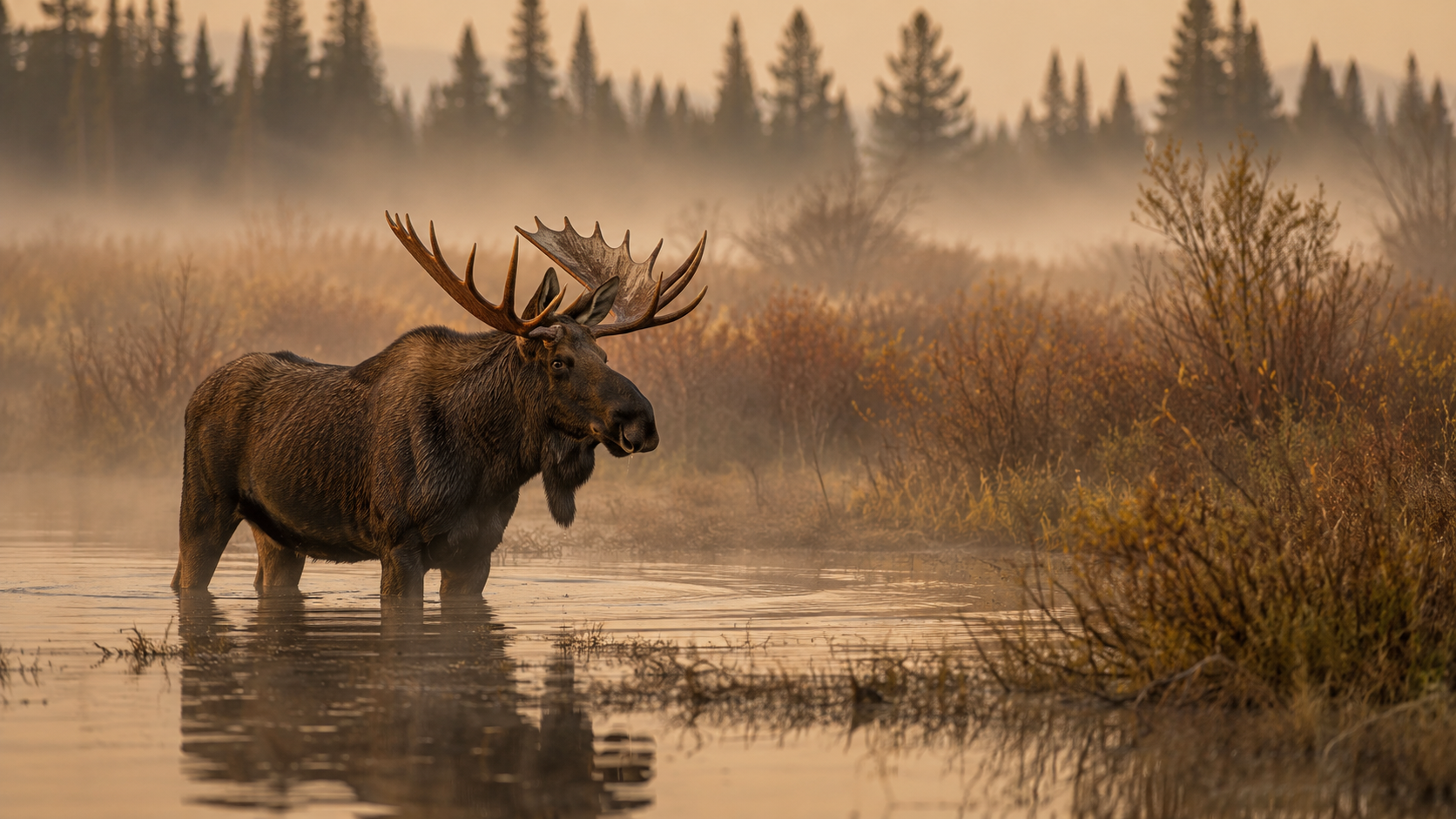
Moose are the largest member of the deer family in North America, and their size, senses, and habitat preferences demand different techniques than deer hunting — scouting, calling, and shot placement all shift accordingly.
Scouting and Habitat
Moose favor wetlands, willow flats, and the edges between dense cover and open feeding areas, particularly near water sources during warmer weather. Pre-season scouting for fresh tracks, rubs, and browse damage on willow and aspen identifies active areas, since moose don’t range as widely as some other big game and tend to use the same feeding areas repeatedly within a season.
Tags, Draws, and Season Timing
Unlike deer, moose tags in most U.S. states and Canadian provinces are limited-draw, allocated by lottery months ahead of the season rather than sold over the counter — Alaska Department of Fish and Game’s own moose hunting regulations lay out a typical draw-permit structure, application deadlines, and unit-specific bag limits that any first-time moose hunter needs to check well before scouting starts. Applying for multiple units in the same draw, where regulations allow it, meaningfully improves draw odds over a single-unit application.
Calling and the Rut
The rut (typically late September through early October across most of their range, varying by latitude) is when calling is most effective — cow calls and bull grunts can draw a responding bull within range, and raking brush to imitate antler contact adds realism. Outside the rut window, calling is far less effective and still-hunting or spot-and-stalk approaches near known feeding areas tend to produce better results.
Wind and Positioning
Moose have a strong sense of smell and will typically abandon an area entirely once they scent a human, unlike some game that merely relocates short distances. Consistently hunting downwind of expected animal movement, and checking wind direction repeatedly through a stalk rather than just at the start, matters more with moose than with less scent-sensitive species.
Shot Placement
A moose’s vital organ zone is proportionally similar to other big game but sits behind significantly more mass, which means marginal hits are more likely to be non-lethal or require extensive tracking. A broadside or quartering-away shot placed on the heart-lung area, with an adequately powerful rifle and premium controlled-expansion bullet capable of penetrating a moose’s size, is the standard ethical shot — a shot that would cleanly harvest a deer isn’t automatically adequate for an animal this large.
Field Dressing and Recovery
A mature bull moose can field dress at 600-800+ lbs, which makes recovery logistics (game carts, quartering in the field, transport capacity) a real planning consideration before the hunt, not an afterthought. Cooling the meat quickly matters more with an animal this size, since the mass retains heat longer than smaller game and spoilage risk rises accordingly in warm weather.
Processing and Storing the Meat
A single moose can yield 400-500+ lbs of boned-out meat — more than most freezers can hold from one animal, which makes a preservation plan as important as the hunt itself. Smoking and curing a portion rather than freezing everything both extends shelf-stable storage and stretches limited freezer space; see the smoking and curing guide for the safe cure-salt ratios large cuts like moose require. A root cellar won’t store raw meat, but it’s worth having ready for the vegetables that typically accompany a fall harvest of this size.
Conclusion
Moose hunting success depends more on habitat knowledge, wind discipline, appropriately powerful equipment, and a real processing plan than on any single tactic, and the animal’s size raises the stakes on shot placement, recovery logistics, and meat storage compared to smaller big game.