A rainwater collection system captures runoff from a roof and stores it for later use, and can supply a meaningful share of household water where regional rainfall and storage capacity are adequately matched to demand. See the full catalog of collection methods for how rainwater compares to wells, surface water, and less common options like fog or dew collection.
Estimating Yield
A rough rule of thumb: 1 inch of rain on 1,000 sq ft of roof yields about 600 gallons before losses. Actual collected volume runs lower after accounting for evaporation, roof surface absorption, and first-flush diversion (discarding the initial runoff, which carries the most debris and contamination from the roof surface). Regional annual rainfall data, available from NOAA or local weather services, is the starting point for sizing a system realistically rather than guessing.
System Components
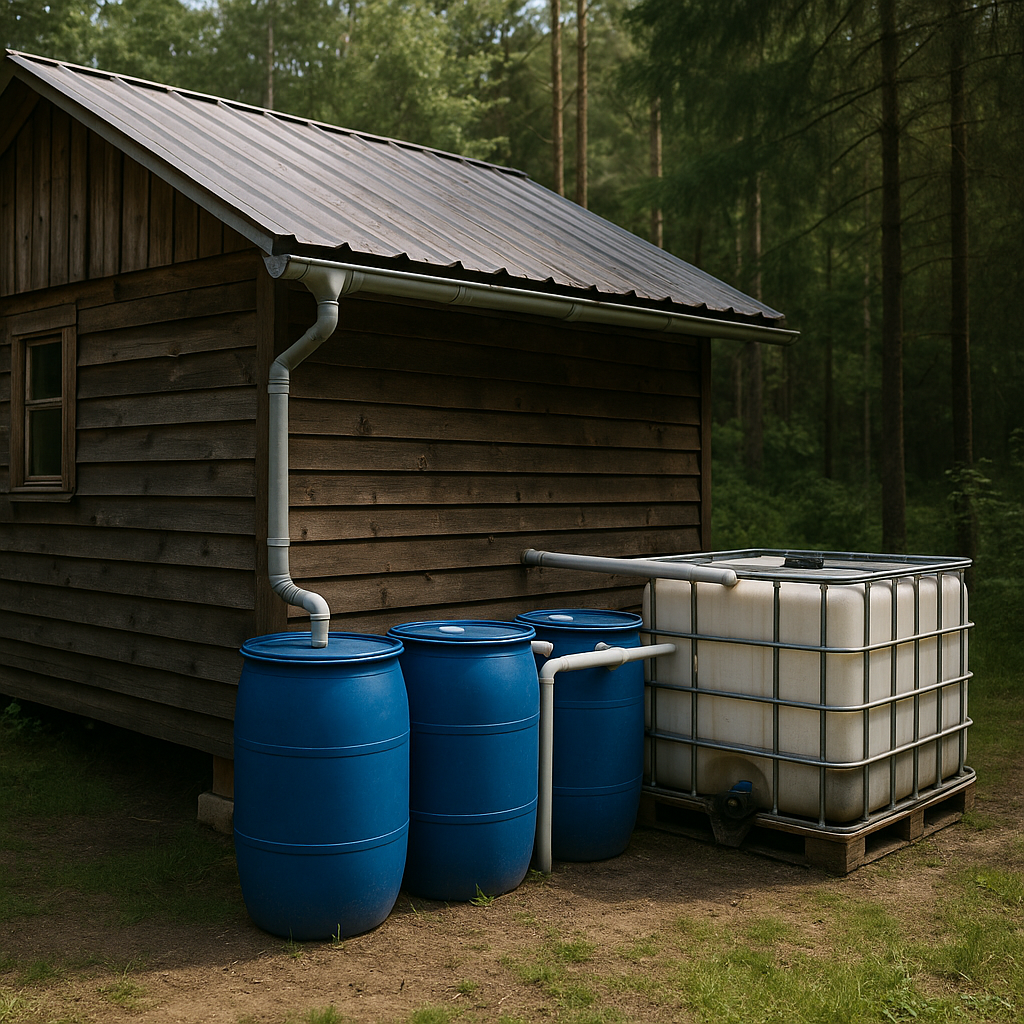
- Catchment surface — metal roofing sheds cleaner runoff than asphalt shingle, which can leach small amounts of particulate and chemical residue over time.
- Gutters and downspouts — sized to handle peak rainfall rate without overflow, with leaf guards reducing debris entering the system.
- First-flush diverter — automatically diverts the first several gallons of each rain event away from storage, meaningfully improving stored water quality.
- Storage — food-grade barrels, IBC totes (275-330 gallons each), or larger cisterns depending on target capacity; opaque or shaded storage prevents algae growth from light exposure. Storage sized for a real off-grid supply, not just garden use, should be planned alongside the property’s broader water and site planning rather than added as an afterthought.
- Filtration — a sediment pre-filter at minimum; anything intended for drinking needs additional filtration or purification rated for pathogen removal, since roof runoff carries bird and animal waste regardless of roof material.
Legal Considerations
Rainwater collection legality and restrictions vary by state, tied historically to water rights law in some western states — Colorado, for example, restricted rainwater collection for decades before easing those rules under HB16-1005 in 2016, and even now caps household rain-barrel storage at 110 gallons across two barrels, restricted to outdoor use only, well below what a serious off-grid system typically needs. Checking current state and local regulations before installing a system, particularly one intended to supply a meaningful share of household water, avoids building something that isn’t legally permitted as designed.
Sizing for Actual Use
Matching storage capacity to both roof yield and actual household consumption (commonly estimated at 7-13 gallons per person per day for drinking, cooking, and basic hygiene) prevents both an undersized system that runs dry between rain events and an oversized one that represents unnecessary cost.
How Many Storage Days a System Actually Buys
A single 1,000-gallon cistern feeding a household using the mid-range 10 gallons/person/day estimate covers roughly 100 person-days of use with zero rain — about 33 days for a family of three, or 25 days for a family of four — before either rain refills it or a backup source is needed. That math is what actually determines whether a “big enough” storage tank is genuinely big enough for a given household size and local dry-spell length, rather than picking a tank size off a generic recommendation.
Conclusion
A correctly sized rainwater system, built with first-flush diversion and appropriate filtration for its intended use, can materially reduce or replace dependence on a well or municipal supply — but sizing it off real regional rainfall data and actual consumption, not assumption, is what determines whether it actually meets need. Source: Colorado State University Extension — Rainwater Collection in Colorado.