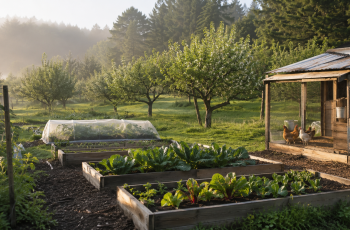
Pigs convert kitchen scraps, garden waste, and forage into meat efficiently, and they’re one of the more approachable large livestock options for a homestead adding meat production beyond poultry.
Space and Fencing
A common guideline is roughly 100-200 sq ft per pig for a dedicated pen, more if pasture or rotational grazing space is part of the setup. Pigs are strong and persistent diggers and pushers, so fencing needs to be genuinely robust — woven wire or well-secured cattle panel rather than standard field fencing, with a hot wire commonly added at snout height to reinforce the barrier, since pigs test fence weaknesses more than most livestock.
Shelter
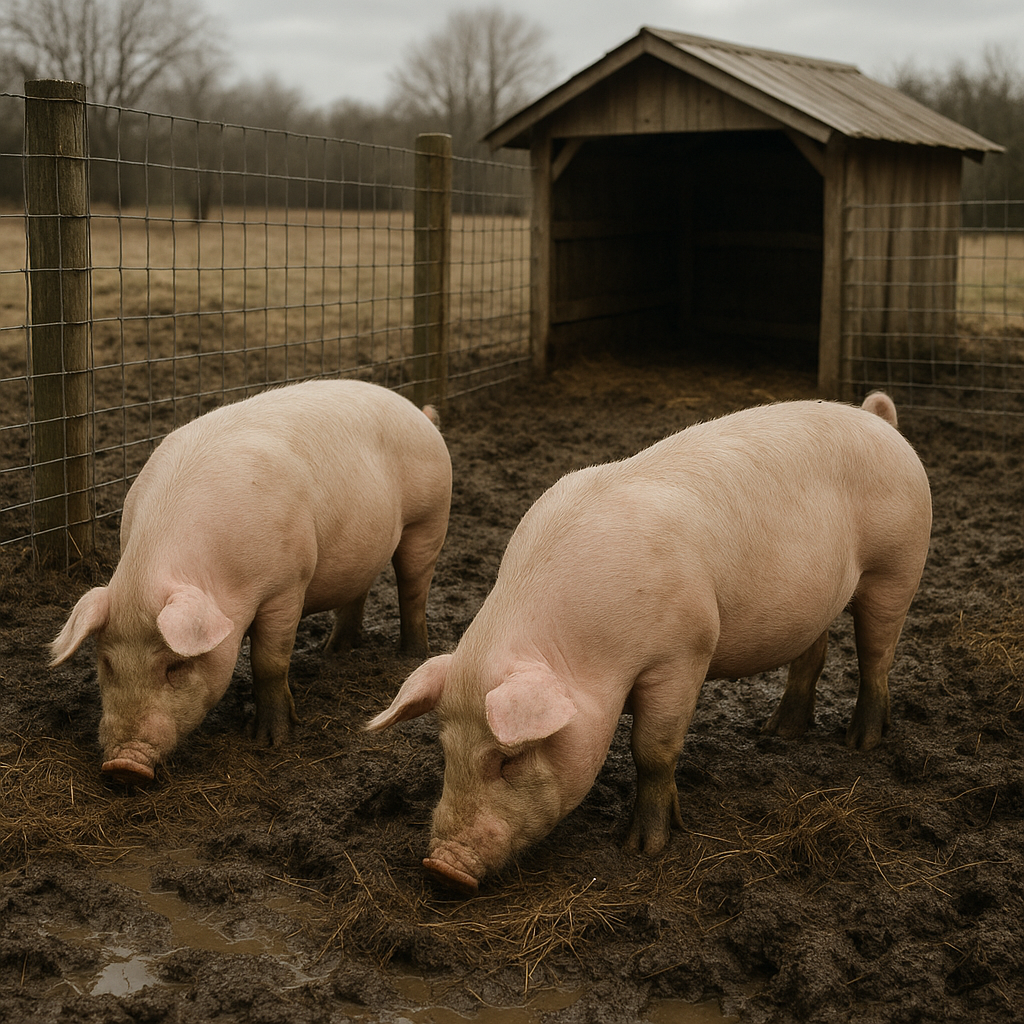
A simple three-sided shelter with dry bedding protects pigs from wind and precipitation; pigs regulate body temperature poorly in extreme heat and benefit from mud wallows or shade access in warm climates, since they can’t sweat effectively like some other livestock.
Feeding
Pigs are omnivorous and will eat kitchen scraps, garden waste, and forage, but a commercial hog feed or properly balanced ration should form the nutritional base, since scraps and forage alone rarely meet complete nutritional needs for healthy growth. Feeding meat or meat products to pigs is illegal in some jurisdictions due to disease transmission risk (a factor in past foot-and-mouth and other livestock disease outbreaks), which is worth confirming locally before including scraps that contain meat.
Growth Timeline
Meat hogs typically reach market weight (around 250-280 lbs live weight) in roughly 5-7 months from weaning, depending on breed and feeding program — a meaningfully faster timeline than cattle, though slower than poultry. That timeline is worth planning against a property’s broader livestock sequencing rather than adding pigs as an afterthought, since fencing and shelter need to be ready before the animals arrive, not built around them after.
Health and Regulations
Basic vaccinations and parasite management (a veterinarian can advise on a schedule appropriate to the region) reduce the most common health issues in small-scale pig raising. Home slaughter and processing regulations vary significantly by state and by whether the meat is for personal consumption versus sale — confirming local requirements before processing, not after, avoids a legal problem on top of the practical one. Once a hog is processed, most of that meat is a strong candidate for smoking and curing — a single hog produces far more meat at once than a freezer alone comfortably manages long-term.
What a Full Hog Actually Yields
The 250-280 lb live-weight target above isn’t the amount of meat that ends up in the freezer — live weight, hanging weight, and final retail cuts are three different numbers, and the gap between them is bigger than it sounds. University of Maine Cooperative Extension’s yield breakdown puts commercially bred hogs at roughly 70-73% dressing percentage (hot carcass weight over live weight), so a 300 lb hog comes off the kill floor around 212 lbs of hanging weight before any cutting happens. From there, the primal cuts break down as a share of the original live weight: ham about 18%, loin 16%, side (bacon) 10%, shoulder 8%, picnic 8%, with roughly 11% lost to trim and waste along the way. Applied to a 280 lb hog, that’s in the neighborhood of 50 lbs of ham, 45 lbs of loin, and 28 lbs of bacon — useful numbers for sizing freezer space and smoking/curing batches before the animal is even processed, not after.
Conclusion
Pigs are a practical meat-production addition for a homestead with adequate space and genuinely robust fencing, but their feeding regulations, shelter needs in extreme weather, and local processing rules each carry real specifics worth confirming before bringing pigs onto the property, not general assumptions. Yield figures above: University of Maine Cooperative Extension — Understanding Pork Yields.