A root cellar uses the earth’s natural insulation to hold a cool, humid environment year-round without any power input, making it one of the oldest and still most energy-efficient methods of extending produce storage life. It’s also a natural second use for other underground structures on a property — a buried or earth-bermed shipping container conversion can approximate the same conditions with less excavation than digging a cellar from scratch.
Target Conditions
Most root vegetables and produce store best between 32-40°F with 85-95% relative humidity — conditions that slow both ripening and moisture loss without freezing the produce. A basic thermometer and hygrometer are the minimum tools needed to confirm a cellar is actually holding these ranges, since underground temperature varies more than intuition suggests depending on depth, soil type, and regional climate.
Frost-Line Depth and Cellar Sizing
How deep a cellar needs to go depends on the local frost line — the depth below which ground temperature stays reliably above freezing through winter. In northern climates (Minnesota, North Dakota, most of New England) that line runs 48-60 inches down; in the upper Midwest and mid-Atlantic it’s typically 24-36 inches; across most of the Deep South and coastal areas it’s under 12 inches. A cellar dug shallower than the local frost line will swing closer to freezing in the coldest weeks of winter, which is why traditional root cellars in cold-climate regions are set a foot or more below the frost line rather than just below grade.
Siting and Construction
Building into a hillside or fully underground maximizes the earth’s insulating effect; a cellar built at or above grade loses much of that benefit. Ventilation matters for two reasons: regulating temperature swings, and preventing a buildup of ethylene gas (naturally released by some stored produce) that accelerates ripening and spoilage in nearby items. Concrete, stone, and brick are common construction materials for their durability and thermal mass; a dirt or gravel floor helps maintain ambient humidity better than a sealed concrete floor would.
Storage Methods by Produce Type
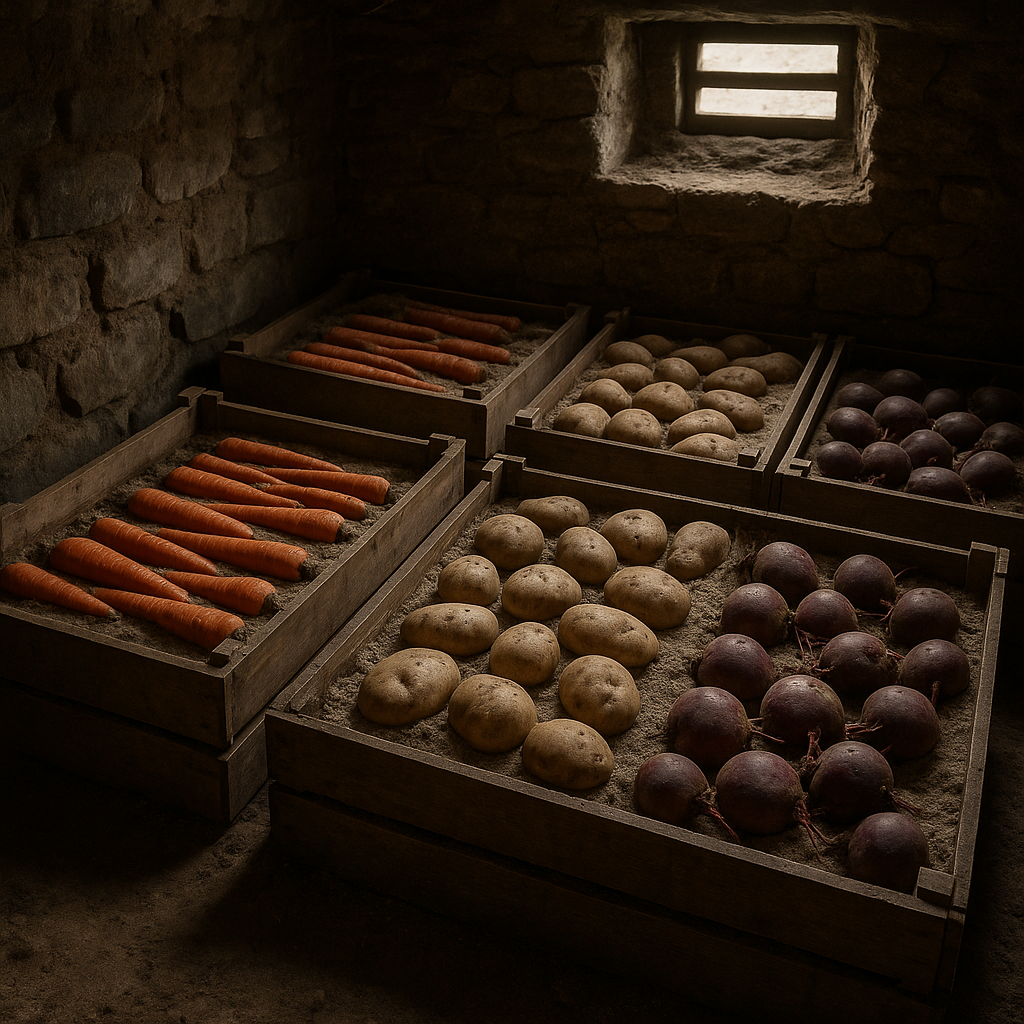
- Root vegetables (carrots, potatoes, beets) — layered in damp sand or sawdust, which maintains humidity directly around the produce and prevents contact between individual pieces.
- Apples and pears — wrapped individually in paper and stored in crates; apples release significant ethylene and should be kept separate from ethylene-sensitive produce like potatoes, which sprout faster when exposed.
- Onions and garlic — hung in mesh bags or braided, since they store better in drier, more ventilated conditions than most root cellar staples — the same drying principle behind smoking and curing meat, where removing moisture is what actually inhibits spoilage.
- Squash and pumpkins — stored on open shelving with space between each piece to allow airflow and easy inspection for soft spots.
Maintenance and Monitoring
Regular inspection matters because spoilage spreads — a single rotting item in a bin of stored potatoes can accelerate decay in items around it, so anything showing soft spots or mold gets removed immediately rather than left until the next scheduled check. Temperature and humidity should be checked on a consistent schedule, since seasonal shifts outside can affect underground conditions with a delay of days to weeks depending on depth and insulation.
Limitations
A root cellar doesn’t work for all foods — items that need freezing temperatures, dry storage, or refrigeration below the cellar’s natural range aren’t good candidates. Canning, dehydrating, and fermentation cover the gaps a root cellar leaves, particularly for produce that doesn’t store well fresh (most leafy greens, tomatoes, and berries fall into this category). For a broader look at what to prioritize when planning a property’s food-storage strategy, see the beginner’s blueprint for off-grid living essentials.
Conclusion
A properly sited and monitored root cellar can hold root vegetables and hardy produce for months with zero energy cost, but it’s one piece of a broader preservation system rather than a complete solution on its own. Source: University of Missouri Extension — Home Storage of Fruits and Vegetables in Root Cellars.