Full independence from the power grid usually happens in stages, not overnight. A number of low-cost changes reduce grid reliance well before any large solar investment, and they build the habits and skills a full off-grid electrical system will eventually require.
Efficiency First
Reducing consumption is cheaper than generating more power, and it directly shrinks the size (and cost) of any future solar or battery system. A standard 60-watt-equivalent LED bulb uses about 8-10 watts, roughly an 85% reduction versus an incandescent bulb of the same brightness. Standby (“phantom”) loads from electronics left plugged in typically run 1-5 watts per device, which adds up to a meaningful continuous draw across a household — a smart power strip that cuts power to idle devices eliminates that load without changing habits.
Portable Solar as a Starting Point
Small portable solar setups — phone chargers, camping panels, solar path lights — are a low-stakes way to learn how solar charging behaves in practice: panel angle relative to the sun, cloud cover losses (often 10-25% of rated output), and battery charge/discharge cycles. A basic 20-40 watt portable panel can fully recharge a phone several times over on a clear day, which is a useful benchmark before scaling up to a whole-home system sized in kilowatts.
Cooking Without Grid Power
A standard 20 lb propane tank holds roughly 430,000 BTUs and will run a typical two-burner camp stove for 15-20 hours of actual cooking time, making it a practical grid-free option long before a full transition. Solar ovens work by concentrating and trapping sunlight; they typically reach 200-300°F, enough for slow cooking and baking but not for a fast sear, and only function well with reasonably direct sun.
Rainwater Instead of Pumped Water
Well pumps and municipal water systems both rely on grid electricity. A rainwater catchment system removes that dependency for at least part of household use: a 1,000 sq ft roof can theoretically collect around 600 gallons from a single inch of rainfall, though real yield is lower after accounting for runoff losses and first-flush diversion. Rainwater collection legality varies significantly by state — Colorado, for instance, historically restricted it under water-rights law before easing those rules in 2016, so local regulations should be checked before installing a system.
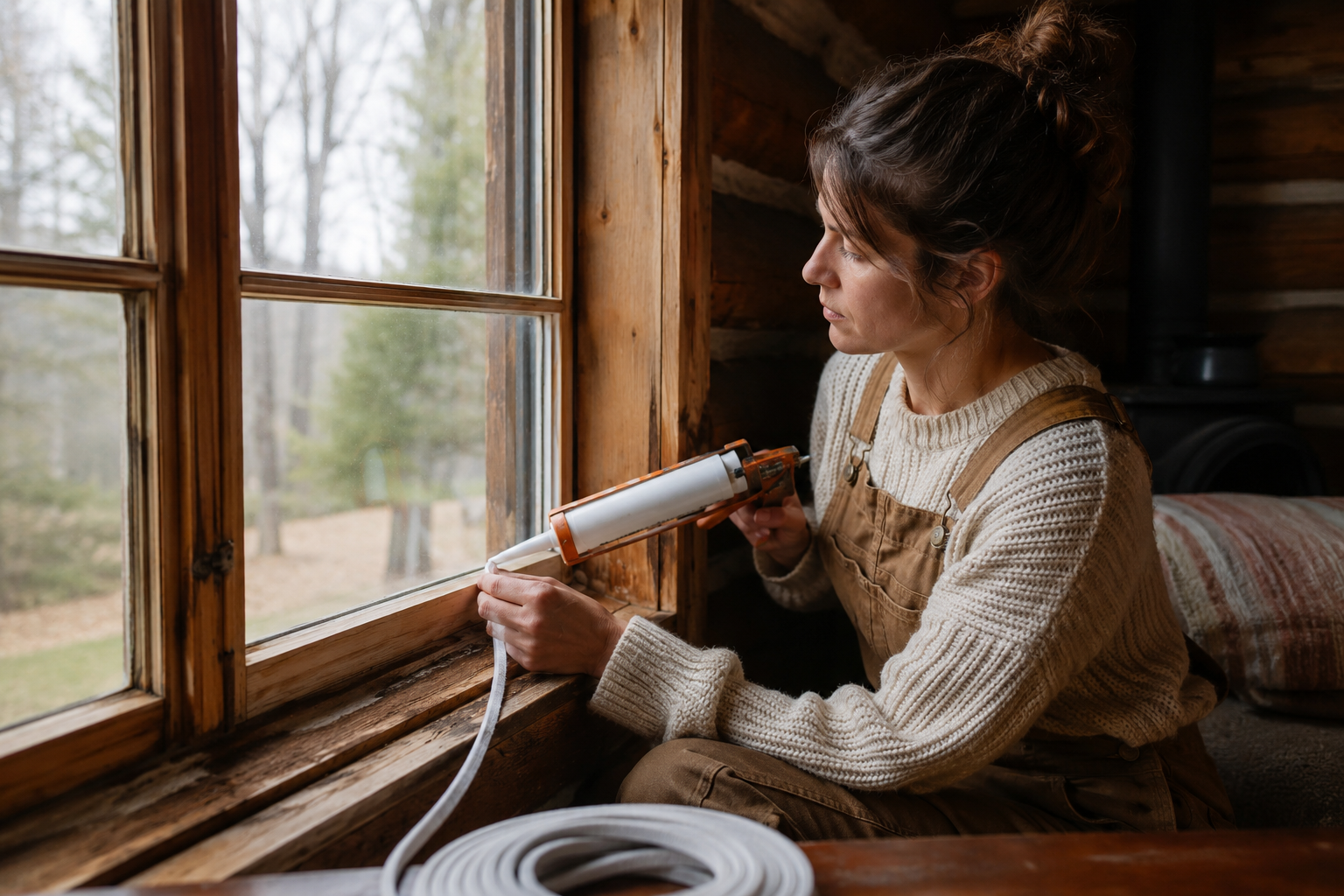
Sealing the House Costs Nothing and Cuts the Biggest Slice
Before any of the above, the building envelope itself is worth a look, because heating and cooling dwarf every other electrical load once cold weather hits. Colorado State University Extension puts space heating at roughly 54% of total home energy use in a typical Colorado household — far ahead of lighting, electronics, or anything covered in the efficiency section above. Caulking and weatherstripping exterior doors and windows, and adding a door sweep to cut air leakage under exterior doors, are both free-to-cheap fixes that shrink that slice directly, before a single watt of generating capacity gets added.
This matters most for anyone still in the planning stage: a leaky building shell means oversizing a future solar and battery system to cover heat loss that a weekend of sealing work would have eliminated for free. Air-sealing work is also the rare home-improvement project that pays for itself immediately rather than over years, since the labor is free and the materials cost is minor.
Practice Days
Running a household for one day a week on stored or generated power only — breakers off, backup battery systems in use — surfaces which appliances draw the most power and which routines depend most heavily on the grid. This is the same diagnostic step utility-scale energy audits use, just applied at a household level.
Conclusion
None of these steps require rural land or a large upfront investment. Reducing consumption, testing small-scale solar, learning grid-free cooking, and catching rainwater all build toward the same skill set a full off-grid electrical system eventually requires — and they make it possible to size that eventual system accurately instead of guessing.