Water is the first system to plan for off-grid, ahead of power or shelter upgrades — a household can survive weeks without electricity but only days without water. The core skills (estimating need, sourcing, storing, and purifying) can all be learned and practiced without owning off-grid land.
Estimating Actual Need
FEMA and the CDC both use a baseline of one gallon per person per day for drinking alone, with more required in hot climates, at altitude, or for pregnant/nursing individuals and children. Once cooking and basic hygiene are added, realistic daily use runs closer to 7-13 gallons per person:
- Drinking: 1 gallon per person per day (minimum)
- Cooking: 1-2 gallons per day
- Cleaning and hygiene: 5-10 gallons per day
A household of four planning for a two-week reserve, using these figures, needs 400-750+ gallons in storage — several IBC totes or a few food-grade 55-gallon barrels.
Sourcing
- Rainwater collection — roughly 0.6 gallons per square foot of roof per inch of rainfall, before runoff losses; a 1,000 sq ft roof in a region averaging 40 inches of annual rainfall can theoretically yield over 20,000 gallons a year.
- Wells — drilling typically runs $15-45 per foot depending on region and geology, with most residential wells drilled 100-400 feet deep; add pump and casing costs on top.
- Springs and streams — can be reliable sources but carry bacterial and parasitic risk (including Giardia) and must always be filtered or treated before drinking.
- Hauled water — a practical bridge solution using food-grade containers from a verified potable source, but labor-intensive as a long-term plan.
Storage
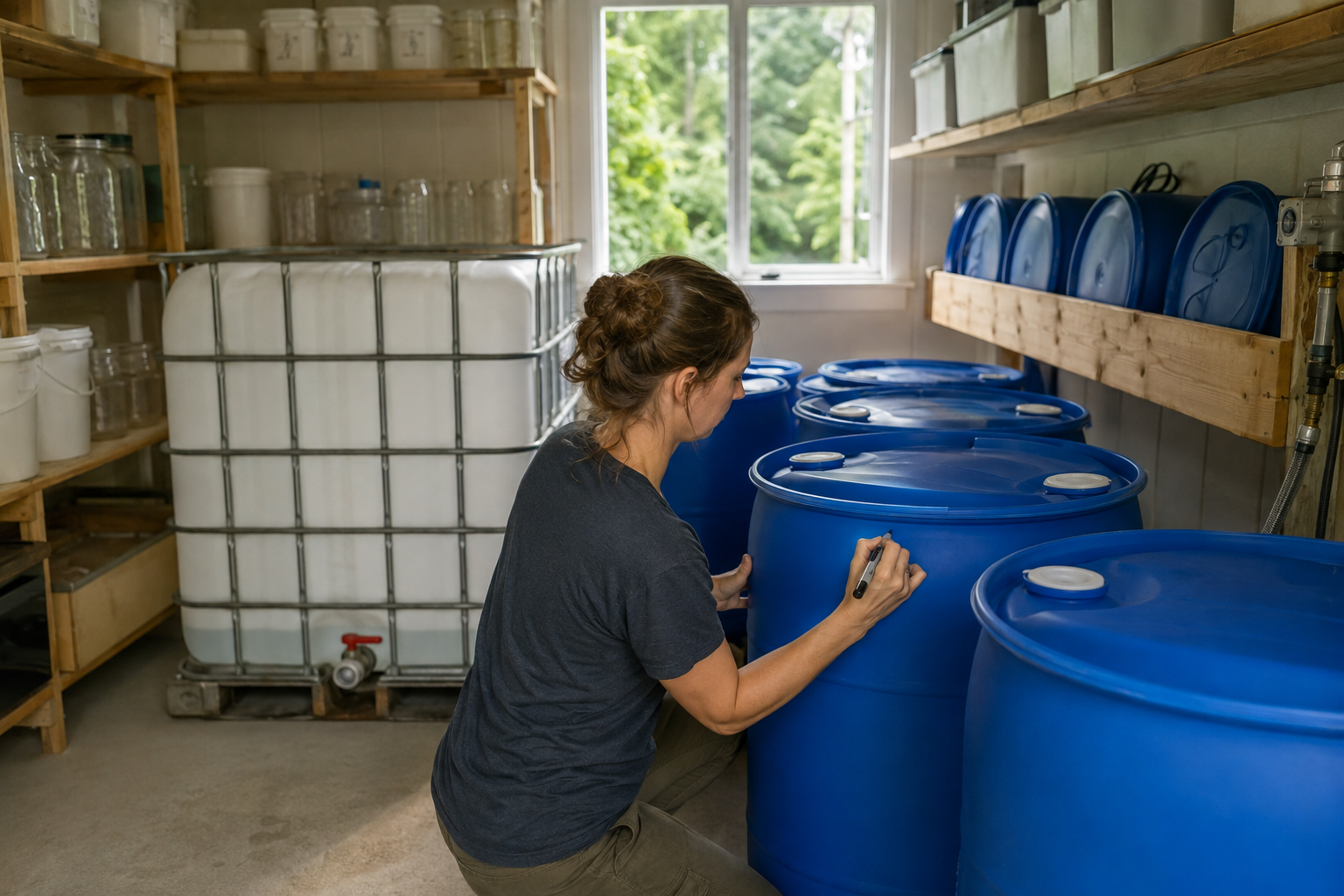
Stored water should be kept in food-grade containers only — non-food-grade plastics can leach chemicals over time. Options scale by volume: water bricks and jugs for portable, small-scale storage; food-grade 55-gallon barrels for household reserves; IBC totes (275-330 gallons) for rainwater catchment systems. All storage should stay opaque or shaded, since light exposure promotes algae growth, and sealed to keep out insects and debris.
Stored Water Needs a Rotation Schedule, Not Just a Barrel
Filling a barrel and forgetting about it is the most common mistake in the storage step above. Per FEMA’s Ready.gov, commercially bottled water should be replaced every six months even sealed in its original container, and homemade or DIY-filled storage needs the same discipline — thoroughly clean food-grade containers with dishwashing soap and sanitize with diluted bleach before filling, which both extends shelf life and meaningfully improves the taste of water that’s been sitting for months.
A simple rotation system (dated labels, oldest water used first for non-drinking tasks like watering plants or cleaning, then refilled) keeps the reserve genuinely usable instead of becoming a stale barrel nobody wants to actually drink from in an emergency. This matters more on an off-grid property than a suburban emergency-kit setup, since the reserve here isn’t a rarely-touched backup — it’s the buffer standing between a normal day and a real problem if the primary source fails.
Purification
The CDC recommends a rolling boil for one minute to kill bacteria, viruses, and parasites (three minutes above 6,500 feet elevation, since water boils at a lower temperature). Filtration effectiveness varies by pore size — a filter rated for 0.2 microns or smaller removes bacteria and protozoa but not all viruses, which are smaller. Chemical treatment (unscented household bleach at roughly 1/8 teaspoon per gallon, or dedicated chlorine/iodine tablets) is effective but leaves a taste and shouldn’t be used as the sole method long-term. UV purifiers neutralize pathogens without altering taste but require a working power source and clear (non-turbid) water to work reliably.
Conclusion
Water planning is a numbers problem as much as a skills problem: knowing actual daily consumption, real collection yields, and correct purification times turns “have enough water” from a guess into a calculation that can be tested and verified before it matters.