Off-grid living is achievable, but the transition is where most costly mistakes happen — not after years of living the lifestyle. The seven mistakes below account for the majority of budget overruns, failed transitions, and abandoned properties reported across the off-grid community.
1. Underestimating Costs
A basic off-grid solar setup (2-5 kW, enough for essential loads) typically runs $10,000-25,000 installed; a full-home system with battery backup can exceed $40,000. Well drilling adds $15-45 per foot, and septic or composting waste systems add several thousand more. Budgeting only for land and a structure, without pricing out these systems individually, is the single most common source of overruns. A 20% contingency on top of itemized estimates is standard practice in construction budgeting generally, and applies directly here.
2. Choosing the Wrong Location
Water availability, sun exposure, soil quality, and access (road frontage, seasonal accessibility) determine whether a property is viable long before any building begins. Land that looks buildable in summer can be inaccessible or floodable in spring; a single site visit misses seasonal problems that a multi-visit evaluation catches.
3. Ignoring Local Regulations
Zoning, minimum dwelling size requirements, septic permitting, and water rights vary by county and can restrict off-grid construction even on privately owned land. Some counties require a certificate of occupancy tied to code-compliant construction before a structure can be legally inhabited. Checking with the local building department before purchasing — not after — avoids buying land that can’t legally be used as planned.
4. Trying to Do Everything at Once
Moving onto raw land before water, shelter, and food systems are functional creates simultaneous pressure on all three at once, which is where most transition failures originate. A staged approach — water and temporary shelter first, then power, then permanent structures — keeps each system’s failure modes isolated and manageable rather than compounding.
5. Overestimating Skills
Chainsaw operation, well and septic maintenance, basic electrical work, and food preservation each carry real injury or failure risk when learned for the first time under pressure. Chainsaw injuries alone send an estimated 36,000 people to U.S. emergency rooms annually, disproportionately among inexperienced users. Building core skills in a low-stakes setting — a class, a mentor, practice on someone else’s land or project — before they’re needed for survival reduces both the injury risk and the likelihood of a costly mistake.
6. Failing to Have a Backup Plan
Solar batteries degrade, wells run dry in drought years, and gardens fail to pests or weather — every off-grid system has a documented failure mode. A backup generator, a minimum two-week water reserve, and a stored food buffer separate a temporary inconvenience from a genuine crisis when a primary system goes down.
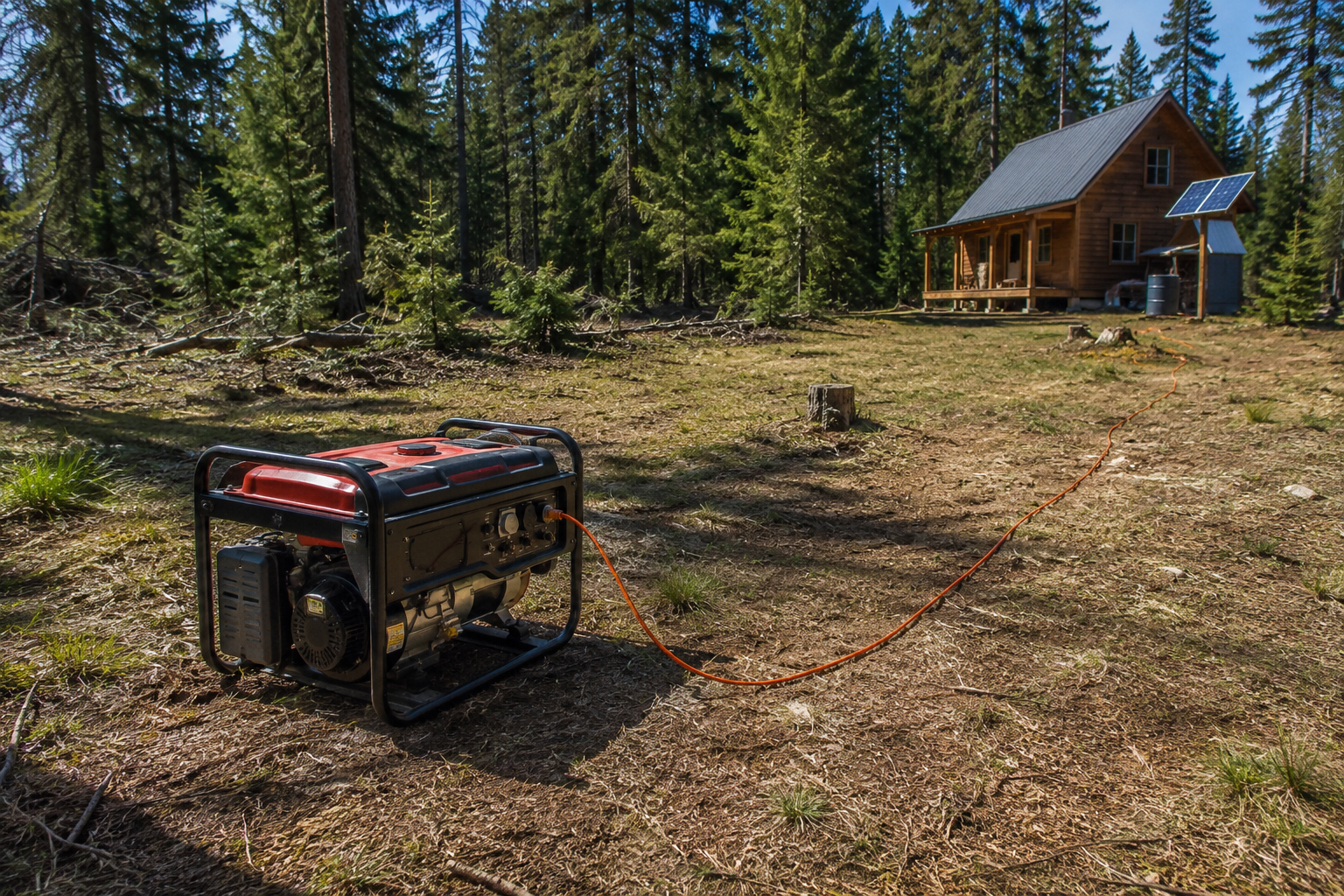
The Backup Generator Has Its Own Real Risk
The backup generator mentioned above solves one failure mode and, run wrong, creates a more dangerous one. Public interest research puts portable-generator carbon monoxide deaths at roughly 70 people a year in the U.S., almost entirely from running a generator too close to a living space — a garage, a porch, even a cracked-open window can be close enough. The fix is specific and non-negotiable: position the generator’s exhaust at least 20 feet from the home or any structure someone could enter, never in an enclosed or partially enclosed space regardless of ventilation.
This is exactly the kind of hazard the “overestimating skills” mistake above is really about — not the operating instructions, which are simple, but the assumption that an odorless, invisible gas will announce itself before it’s a problem. A carbon monoxide detector rated for the generator’s storage and use area is a cheap addition worth budgeting alongside the generator itself, not an optional extra.
7. Neglecting the Mindset Shift
Off-grid living replaces a call to a plumber or utility company with direct, hands-on problem-solving under time pressure. Underestimating that mental and logistical shift — not just the physical workload — is a commonly cited reason people abandon off-grid properties within the first two years.
Conclusion
Most off-grid failures trace back to one of these seven mistakes rather than bad luck. Itemized budgeting, thorough site evaluation, regulatory research, staged implementation, pre-built skills, redundant systems, and a realistic expectation of the workload together account for the difference between a sustainable transition and an expensive false start.