Standard shipping containers (most commonly 20 or 40 feet long, roughly 8 feet wide with 8.5-9.5 feet of interior height) provide a weatherproof steel structure that can be adapted to a range of uses on an off-grid property, at a fraction of the cost and build time of framed construction. Before committing a container to a specific use, it helps to have already worked through the broader off-grid property planning decisions — water, power, and access all shape where a container ends up making sense.
Living and Working Spaces
- Guest or starter cabin — a single 20-foot container, insulated and finished, provides roughly 160 sq ft of usable space, enough for basic sleeping and living quarters.
- Workshop — the steel structure handles heavy tool mounting and vibration better than a typical wood-framed shed.
- Home office or studio — a smaller, quieter dedicated space separate from a main dwelling. Any of these occupied uses needs a real power source; see the off-grid solar system installation guide for sizing a standalone array to a single structure like this rather than a whole homestead.
Storage and Utility
- Secure storage — steel construction resists forced entry and weather significantly better than a standard shed.
- Root cellar conversion — a partially buried or earth-bermed container can approximate root cellar storage conditions with less excavation than a fully dug structure, though insulation and ventilation still need to be added.
- Rainwater or fuel storage housing — protects tanks and equipment from UV degradation and weather.
Agricultural Uses
- Greenhouse conversion — requires cutting significant window/skylight openings for adequate light, which reduces the structure’s inherent strength and needs proper reinforcement.
- Livestock shelter — durable and predator-resistant, though ventilation needs to be actively engineered in, since steel boxes trap heat and humidity without it.
Key Modification Considerations
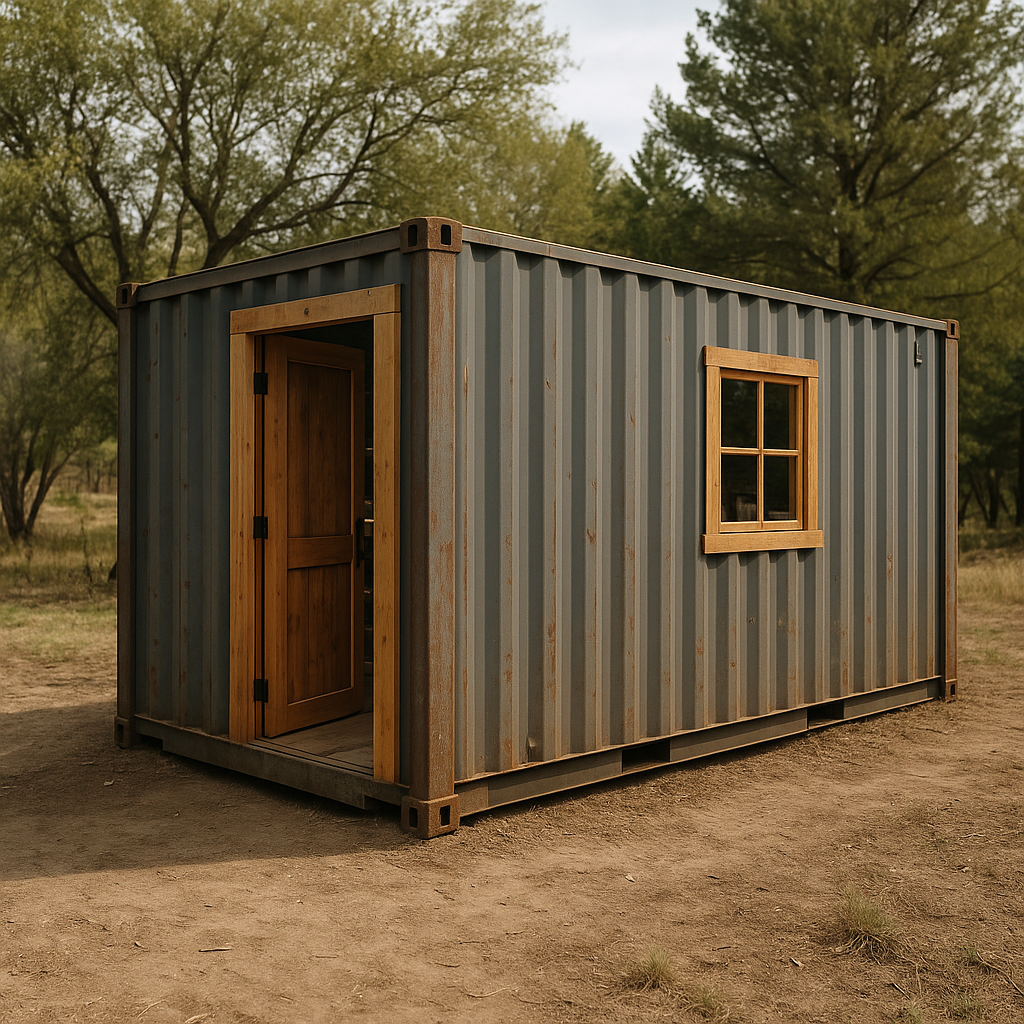
Steel conducts heat efficiently, so any container intended for regular occupancy needs real insulation (spray foam is common, since it also addresses condensation risk on the interior steel surface) — an uninsulated container is uncomfortably hot in summer and cold in winter regardless of climate. Cutting openings for doors, windows, or ventilation removes structural strength from the corrugated steel walls, so larger openings typically require added steel framing to compensate. A level foundation (concrete piers or a poured slab, not bare ground) prevents the container from twisting out of square over time, which can jam doors and crack interior finishes.
What Insulation Actually Costs
Closed-cell spray foam runs roughly R-6 to R-7 per inch, close to double open-cell foam’s R-3.6-4.2 per inch (see ENERGY STAR’s insulation R-value guidance, linked below), so a 2-inch application on a container’s interior walls and roof lands around R-13, adequate for a three-season workshop but light for a year-round living space in a cold climate, where 3-4 inches (R-20-26) is closer to a comfortable target. On a 20-foot container (roughly 320 sq ft of interior wall/ceiling surface once framing is accounted for), spray foam contractors commonly price the job at $1.50-3.00 per board foot installed, which puts a 2-inch full-interior job in the rough range of $960-1,920 before any interior finish material. Rigid foam board glued and taped to the steel is a cheaper, more DIY-friendly alternative at a lower per-inch R-value, but doesn’t self-seal the seams and rivets the way sprayed foam does, which matters for controlling condensation on bare steel.
Sourcing and Cost
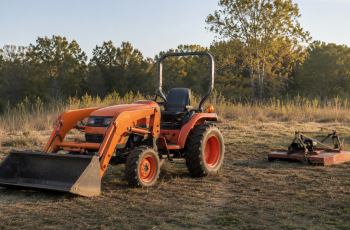
Used “cargo-worthy” containers (structurally sound but retired from ocean shipping) are the most economical option; “one-trip” containers cost more but come with minimal wear. Pricing varies by region and container condition, but used 20-foot containers commonly run $2,000-4,000 before any modification, delivery, or site prep costs. Moving a loaded 20-foot container (roughly 5,000 lbs empty, more once modified) onto a property is usually beyond what a standard homestead tractor can safely handle alone — see the tractor sizing guide for what a property tractor can and can’t do versus when a dedicated container-delivery truck with a tilt-bed or hook-lift is the safer call.
Conclusion
A shipping container is a durable, relatively low-cost starting structure for many off-grid uses, but insulation, structural reinforcement around any openings, and a proper foundation are what determine whether the finished result is genuinely functional rather than just cheap. Source: ENERGY STAR — Seal and Insulate.