Raw off-grid land is unimproved — no power, water, septic, or road access already in place — which makes evaluation before purchase more important than for a developed property. The gaps that aren’t obvious on a walkthrough are the ones that turn into the largest post-purchase costs.
Evaluating the Land Itself
Soil quality, terrain, and climate together determine what’s realistically buildable and farmable. A basic DIY soil test kit (roughly $15-30) gives pH and major nutrient levels; a lab test (typically $20-75 through a university extension office) adds contaminant screening and is worth the cost before committing to food production on unfamiliar land. A topographic map reveals drainage patterns, slope, and flood-prone low areas that aren’t visible on a single site visit, and should inform where a structure, well, and septic system each go relative to each other.
Zoning and Regulations
County zoning determines minimum dwelling size, setback requirements, and whether off-grid systems (composting toilets, alternative septic, solar-only power) are permitted at all — some counties still require connection to municipal utilities where available, regardless of owner preference. Checking with the local building and planning department before purchase, not after, avoids buying land that can’t legally be used as intended.
Water
A water test (roughly $15-100 depending on scope) is standard due diligence for any well, spring, or surface source before relying on it, checking for bacterial contamination and, depending on the region, agricultural runoff or naturally occurring contaminants like arsenic. Rainwater catchment can supplement a primary source — a 1,000 sq ft roof yields roughly 600 gallons per inch of rainfall before runoff losses — but rarely substitutes for a well or spring as the sole source in a dry climate.
Power
Solar and wind each depend on local conditions — a site’s average sun hours per day determines the sizing covered in the solar installation guide, while wind is only cost-effective at sustained average speeds most residential sites don’t have. A basic off-grid solar system with battery storage and an inverter to convert stored DC power to usable AC typically runs $10,000-25,000 installed for essential loads, more for whole-home coverage.
Waste Management
A conventional septic system requires a perc test to confirm the soil can absorb effluent at an acceptable rate, and typically costs $3,000-10,000+ installed depending on soil conditions and system type. Pit privies, composting, or incinerating toilets are lower-cost alternatives but aren’t legal everywhere — this is one of the regulations worth confirming with the local health department before purchase, not after.
What a Failed Perc Test Actually Means
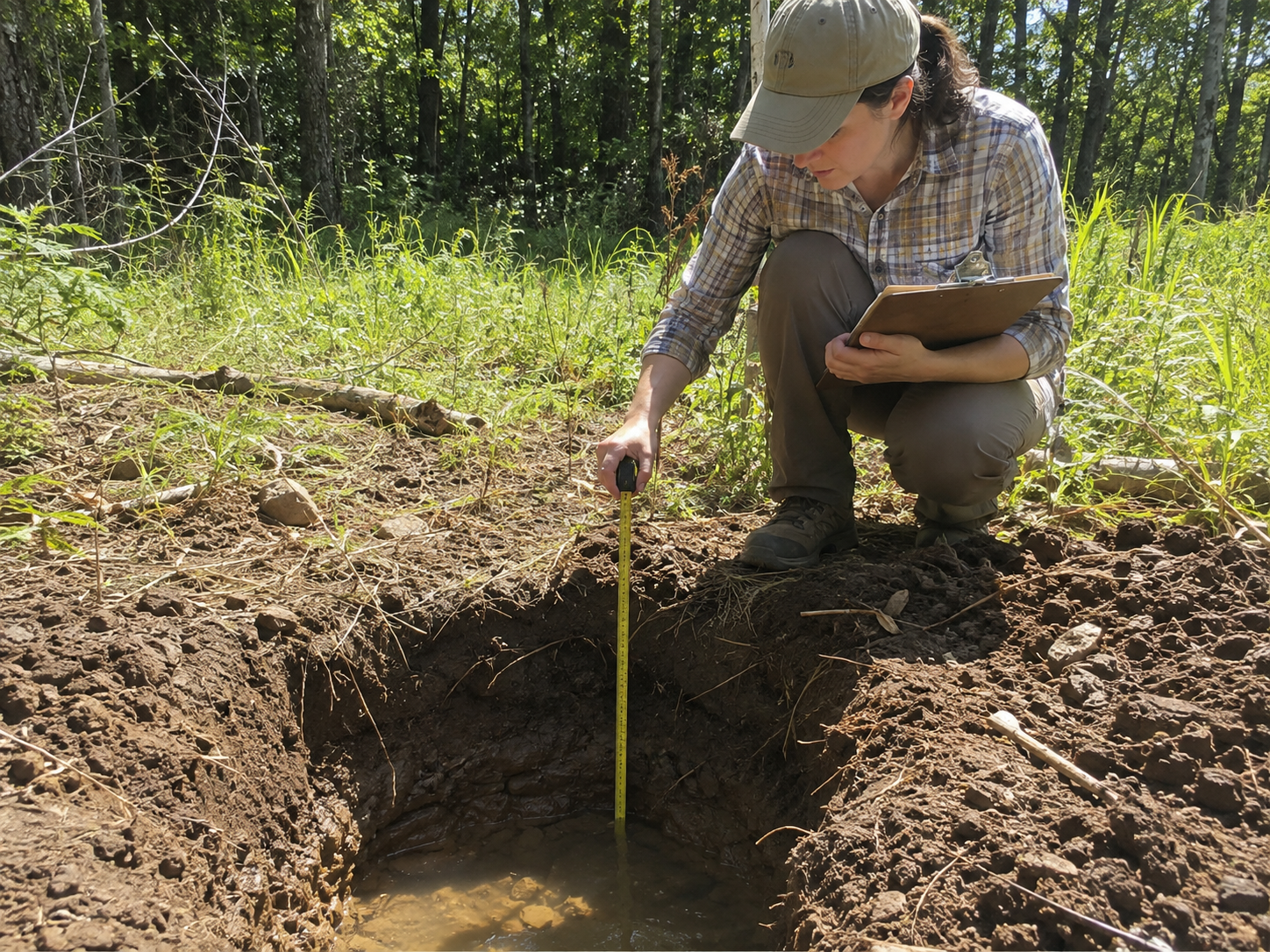
The perc test mentioned above isn’t just a pass/fail formality — the actual number matters for what gets built afterward. Per University of Nebraska Extension, a rate of 5 to 60 minutes per inch is the acceptable range for a standard soil absorption drain field. Faster than 5 mpi and wastewater moves through too quickly to be properly treated, risking groundwater contamination; slower than 60 mpi and the soil (typically high clay content) can’t absorb effluent fast enough, requiring an engineered alternative like a lagoon system or a professionally designed mound — both of which push installed cost well past the $3,000-10,000 range cited above for a conventional system.
This is exactly why a purchase offer on raw land should be contingent on the perc test result, not scheduled for after closing: a rate outside that 5-60 mpi window doesn’t make a property unbuildable, but it can double or triple the septic budget before a single foundation goes in — the kind of surprise cost this whole evaluation process, and the property-essentials checklist it pairs with, exists to catch before the sale closes.
Conclusion
The land price is rarely the full cost of raw off-grid property — water, power, septic, and access improvements typically add tens of thousands of dollars beyond the purchase price. Testing soil and water, confirming zoning, and pricing out utility systems before closing turns those costs from a surprise into a plan.