Off-grid construction in Alaska deals with conditions few other U.S. regions face at the same scale: sustained sub-zero temperatures, permafrost in northern regions, extreme seasonal daylight variation, and limited road access to much of the state’s rural land.
Site Selection
Access matters more in Alaska than almost anywhere else in the country — many off-grid Alaskan properties are reachable only by small plane, boat, or snowmachine depending on season, which affects everything from initial construction material delivery to routine resupply. Permafrost (ground that stays frozen year-round at depth) affects foundation design significantly; the Cold Climate Housing Research Center’s own permafrost foundation research documents how building without accounting for it leads to a structure settling unevenly as the active thaw layer shifts seasonally — often years after construction, once the ground’s thermal balance has actually been disturbed.
Insulation and Building Envelope
Interior Alaska winter temperatures commonly drop to -20°F to -40°F for extended periods, which calls for wall insulation well beyond standard Lower-48 code minimums — R-40 to R-60 in walls and R-60+ in ceilings is common practice for genuinely cold-climate Alaskan construction, roughly double typical temperate-climate recommendations. Vapor barrier placement and airtightness matter more at these temperatures too, since interior moisture condensing inside a wall cavity in extreme cold causes rapid structural damage.
Power Systems
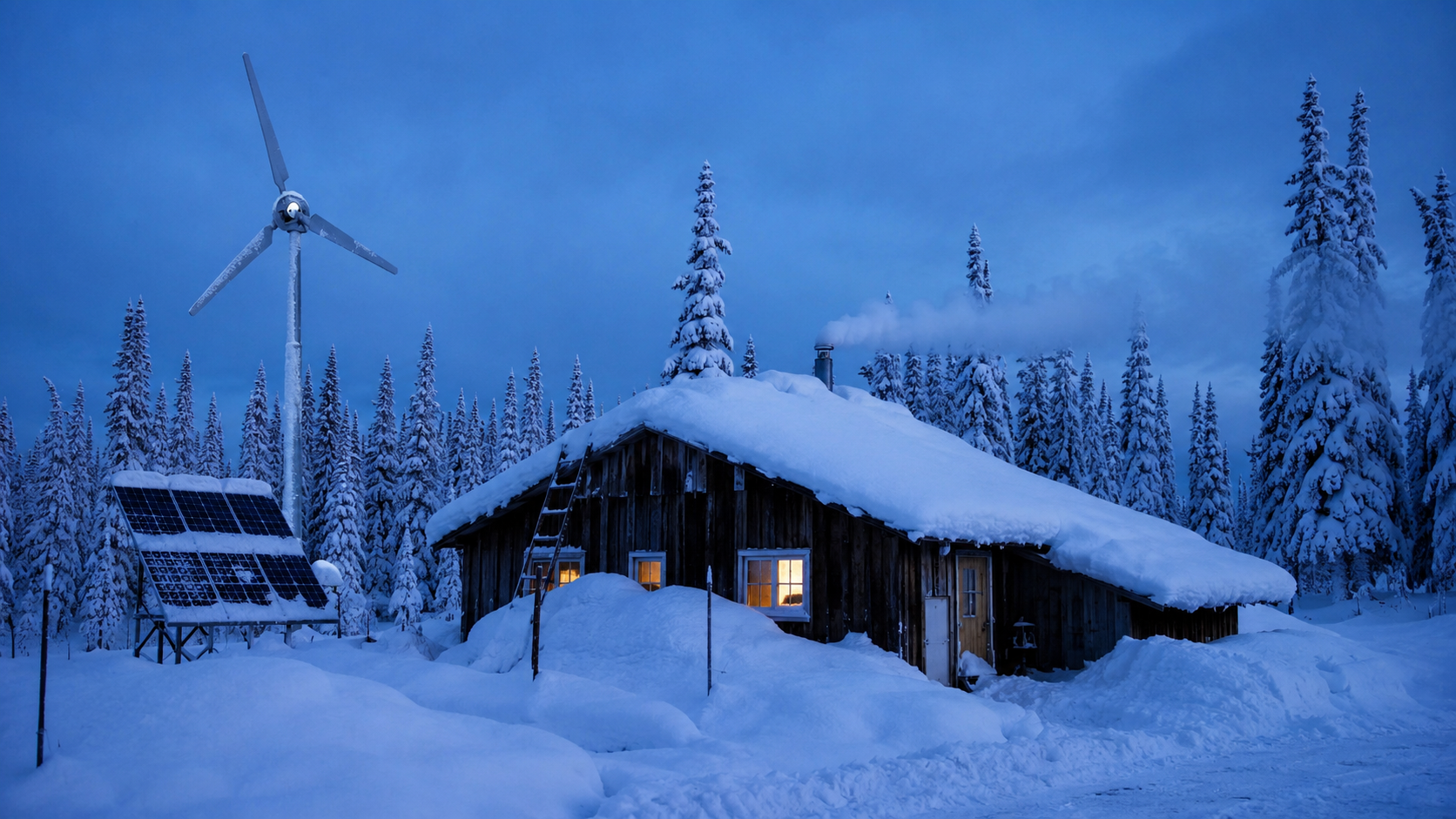
Solar output swings dramatically with Alaska’s extreme seasonal daylight variation — near-continuous summer daylight versus as little as 4-6 hours in parts of interior Alaska in December. A solar-only system sized for summer output will fall well short in winter, which is why most off-grid Alaska power setups pair solar with a wind turbine (viable in many Alaskan locations given consistent wind) or a backup generator to cover the winter shortfall, rather than relying on solar alone. Cold weather also affects the battery bank itself — sizing and heating the battery enclosure for -40°F conditions is a genuinely different problem than a temperate-climate install.
Water and Waste
Water lines and any exposed plumbing need to be buried below the frost line or heat-traced to prevent freezing; in permafrost regions, achieving true frost-line burial depth isn’t always possible, which is why many rural Alaskan properties use above-ground insulated “arctic pipe” systems instead of buried lines. Septic systems face similar frozen-ground challenges, making composting or incinerating toilets a common practical choice in the most remote or coldest locations.
Regulatory Considerations
Alaska’s borough and unorganized-territory structure means regulatory oversight varies enormously by location — some rural areas have minimal building code enforcement, while organized boroughs may have requirements similar to other states. Confirming actual local requirements, rather than assuming rural Alaska is universally unregulated, avoids surprises during any later permitting, financing, or insurance process.
Conclusion
Alaska’s off-grid conditions are a meaningfully more extreme version of general off-grid building challenges, not a different category entirely — but permafrost-aware foundation design, well-above-average insulation, seasonal power system redundancy, and honest access planning are non-negotiable rather than optional refinements at these temperatures and this level of remoteness.