Chickens raised for meat and chickens raised for eggs are bred for different purposes, and the distinction affects growth rate, feed requirements, and how long each type stays productive — a real decision to make before building a coop sized and equipped for one purpose or the other.
Meat Birds
Meat birds, or broilers, are bred for rapid weight gain and efficient feed conversion. The Cornish Cross is the most common commercial meat breed, reaching market weight (typically 5-7 lbs live weight) in just 6-8 weeks — a growth rate roughly three times faster than a heritage dual-purpose breed. This speed comes from selective breeding for large breast and thigh muscle, not from any feed additive, though it does require close monitoring: Cornish Cross birds are prone to leg and heart problems if allowed to overeat relative to their growth rate.
Meat bird starter feed runs 22-24% protein, dropping to 18-20% for grower feed as the bird matures — both meaningfully higher than a laying hen’s diet, reflecting the muscle-building priority. The eXtension poultry nutrition resource, maintained by land-grant university poultry specialists, is a useful independent reference for these protein targets rather than relying on a feed bag’s marketing copy alone.
Egg Layers
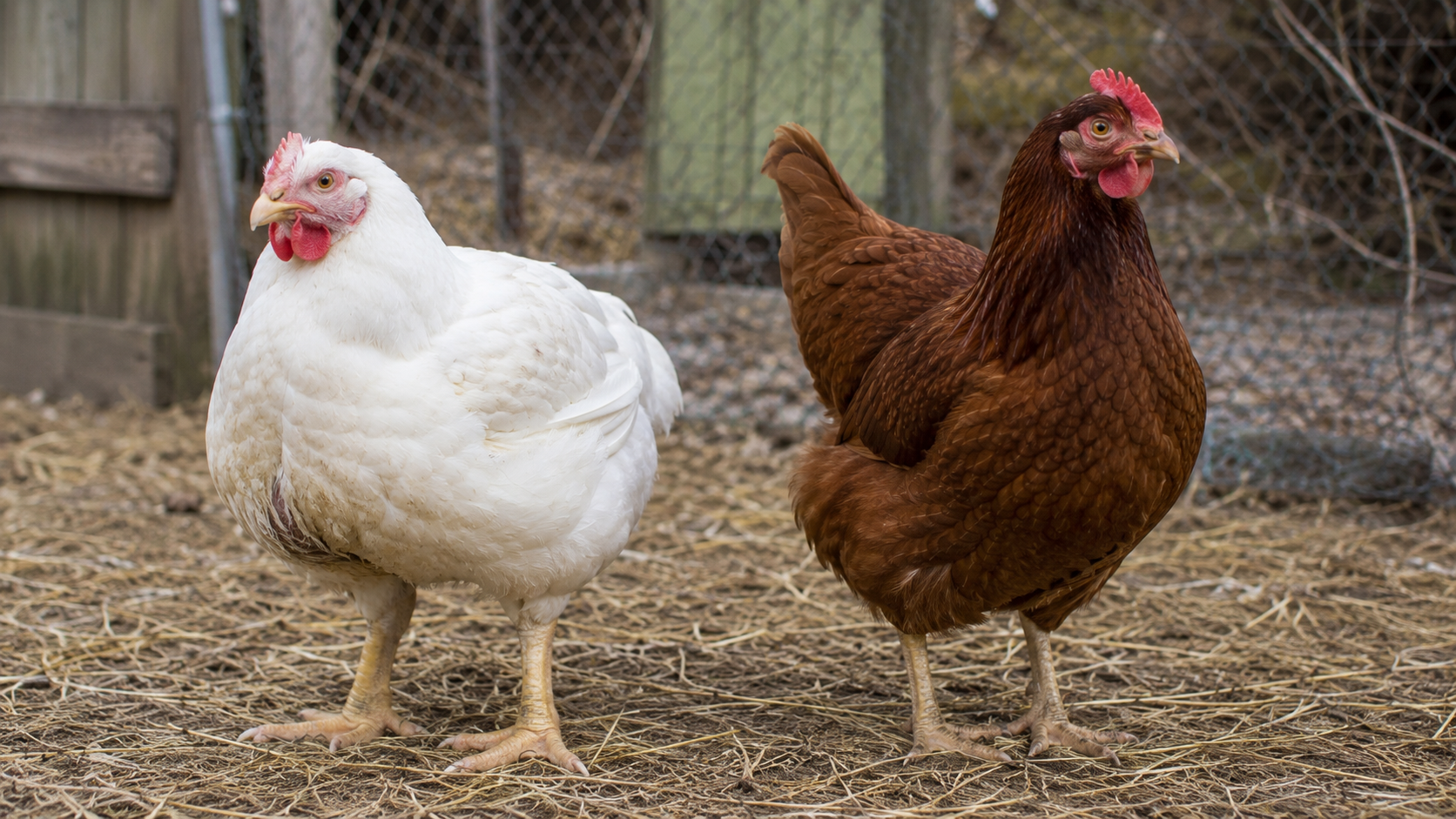
Egg-laying breeds (Leghorns, Rhode Island Reds, Australorps among the most common) are leaner, more active, and bred for sustained egg production rather than muscle mass. A productive laying hen typically lays well for 1-2 years at peak rate, though many breeds continue laying at a reduced rate for several years beyond that. Layer feed runs 16-18% protein with 3.5-4% calcium — the calcium requirement is specific to shell formation and is roughly double what a non-laying bird needs. See the guide to sourcing egg-laying chicks for what to look for when buying started pullets versus day-old chicks.
Dual-Purpose Breeds
Breeds like Plymouth Rocks, Orpingtons, and Wyandottes split the difference — typically producing 200-250 eggs per year (versus 250-300 for a dedicated layer breed) while also reaching a usable size for meat, generally in 16-20 weeks rather than the Cornish Cross’s 6-8. For a small homestead flock serving both purposes, dual-purpose breeds are usually the more practical choice, since running separate meat and layer flocks adds real complexity for a modest gain in output per bird.
Management Differences
Meat birds need controlled feeding to prevent the growth-related health problems mentioned above, and their short production cycle means less long-term infrastructure investment. Egg layers need consistent light exposure (roughly 14-16 hours to sustain winter laying rates) and nesting boxes — one box per 3-4 hens is the standard ratio — along with the longer-term health maintenance that comes with a multi-year production life.
Conclusion
The right choice depends on the goal: dedicated meat or egg breeds outperform dual-purpose birds at their specialty, but dual-purpose breeds remain the more efficient overall choice for a homestead flock that wants both without managing two separate systems.