Egg-laying chickens can be sourced as day-old chicks, started pullets, or point-of-lay hens, and the right choice depends mostly on how soon eggs are needed and how much brooding infrastructure is already in place. See the meat-bird-vs-egg-layer breed comparison first if the breed itself hasn’t been decided yet.
Local Farms and Feed Stores
Buying locally allows direct inspection of a bird’s health and behavior before purchase, which isn’t possible with a shipped chick. Local sellers can also speak to how a given breed performs in the specific regional climate, which matters more than general breed descriptions suggest — a breed rated cold-hardy in one region’s winter may still need supplemental heat in a harsher one.
Online Hatcheries
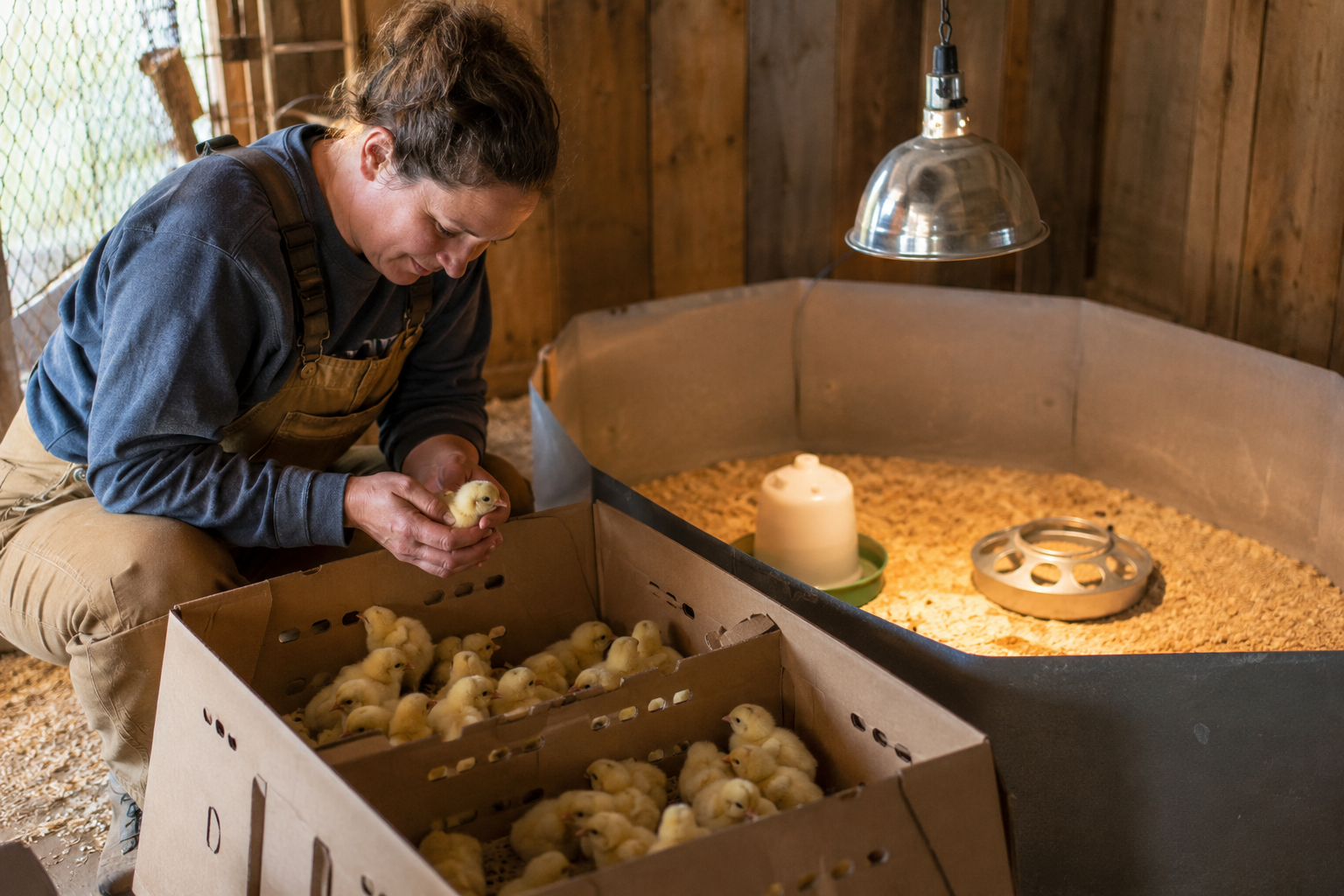
Mail-order hatcheries offer far more breed variety than most local sources, and ship day-old chicks because chicks can survive roughly 48-72 hours on residual yolk nutrients without eating — the biological basis for shipping newly hatched birds nationally. Most hatcheries require a minimum order (commonly 3-25 birds depending on the hatchery) specifically because chicks generate body heat more effectively in a group during transit. A brooder (heat source, feeder, waterer, and draft-free enclosure) needs to be fully set up before the chicks arrive, not after.
Point-of-Lay Hens
Hens sold at point-of-lay (typically 16-20 weeks old, just before or as they begin laying) skip the 4-5 month wait required to raise chicks to laying age, at a meaningfully higher per-bird cost — often $20-50 versus $3-10 for a day-old chick. This route suits anyone prioritizing a fast start over cost or the experience of raising chicks.
Agricultural Extension Offices
County extension offices, typically affiliated with a state land-grant university, maintain current information on local backyard poultry regulations and can often point to nearby breeders or upcoming poultry sales — a useful resource independent of where the birds themselves end up being sourced.
Check for NPIP Certification Before Ordering
Whichever source is used — hatchery, local breeder, or a poultry swap — one credential is worth checking regardless: National Poultry Improvement Plan (NPIP) certification. It’s a federal-state cooperative program dating to the 1930s that tests breeding flocks for Salmonella Pullorum and Salmonella Gallinarum at minimum, with many participants also monitored for Mycoplasma and Avian Influenza. Reputable hatcheries advertise their NPIP status openly; a seller who can’t answer the question at all is worth a second look, especially for anyone planning to add birds to an existing flock rather than starting from zero.
NPIP status matters most exactly where a new flock is most vulnerable — the first few weeks after new birds arrive, before anyone would otherwise notice a health problem. It won’t catch everything, but it’s a real, checkable filter that costs nothing to ask about before money changes hands.
Rescue and Rehoming
Some animal rescues and former commercial-layer rehoming programs place hens that are past peak commercial production age but still capable of laying at a reduced rate for backyard purposes. These birds may need a longer adjustment period and closer health monitoring initially, since their prior living conditions vary widely.
Conclusion
Day-old chicks are the lowest-cost entry point but require brooding infrastructure and a 4-5 month wait for eggs; point-of-lay hens cost more but start producing almost immediately. Local sourcing allows direct health assessment; hatcheries offer far more breed selection. The right mix depends on timeline, budget, and how much of the raising process is part of the appeal.