
A pit privy is one of the oldest off-grid sanitation solutions, and remains a practical option where a septic system isn’t feasible or affordable. Building one that lasts and stays sanitary depends more on placement and ventilation than on any specific building style.
Site Selection
Most state and local health codes require pit privies to sit at least 50-100 feet from any well, spring, or surface water source, with exact distances varying by jurisdiction and groundwater depth — this is worth confirming with the local health department, since it’s often a legal requirement, not just a best practice. Elevated, well-drained ground reduces the risk of the pit flooding during heavy rain, which is both a sanitation hazard and a structural one.
The Pit
A depth of roughly 5-6 feet and width of 3-4 feet is a common standard, similar in scale to the excavation work covered in the property build-sequence guide, giving a single-family structure several years of capacity before needing to be relocated or emptied, depending on usage rate. Lining the upper portion of the pit (with block, brick, or treated lumber) prevents the walls from collapsing near the surface, where the structure’s weight bears down.
Structure and Materials
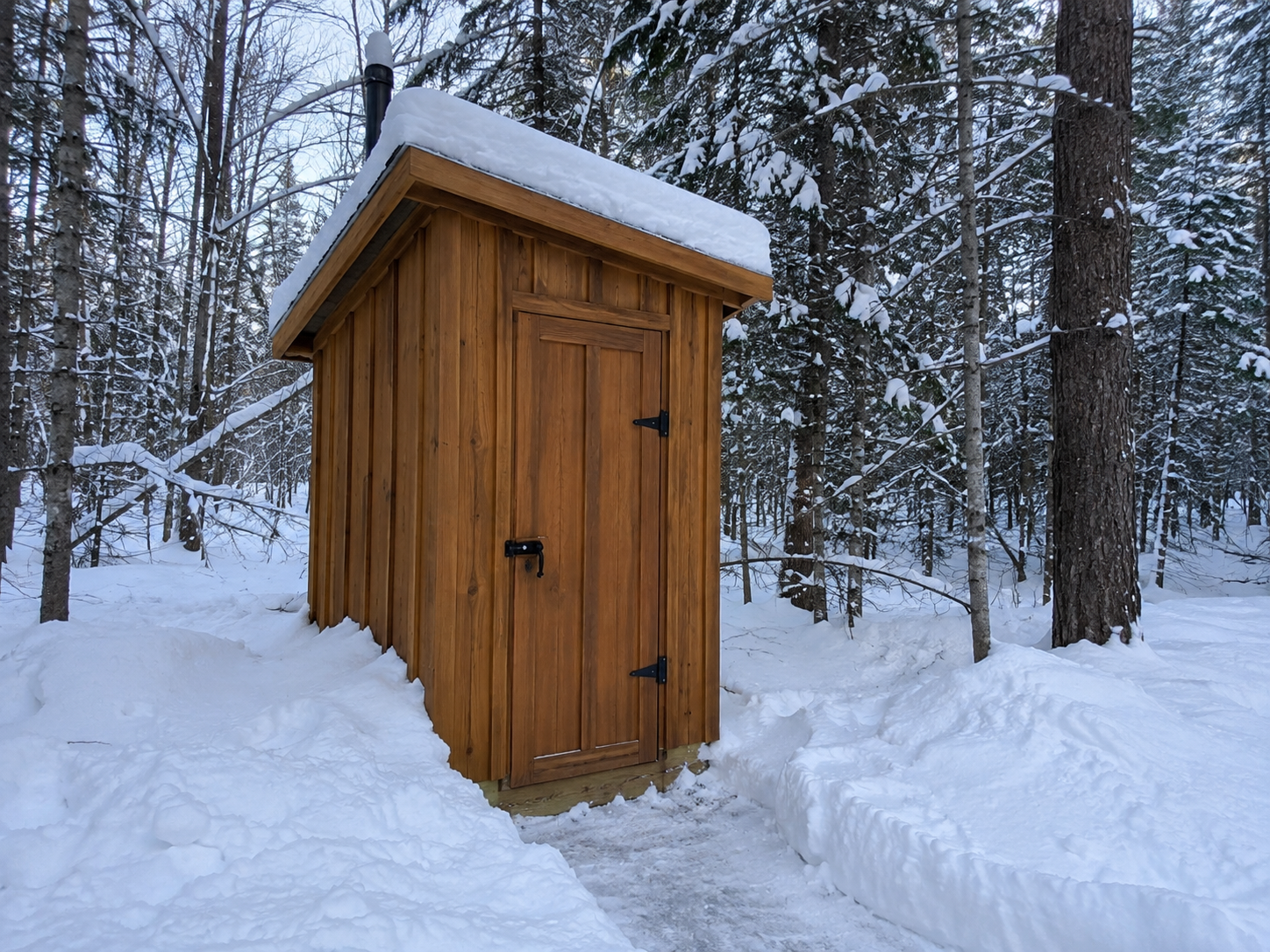
Pressure-treated lumber resists rot from ground contact and humidity better than untreated wood, which matters most for the frame (the same durability tradeoff covered in the property tools rundown) and any part near the pit opening. Board-and-batten siding is a traditional, relatively low-cost option that also sheds water effectively. Roofing material should be genuinely waterproof, not just water-resistant — a persistent leak accelerates rot in the frame far faster than exterior weathering alone.
Ventilation
A vented pit privy design (a screened vent pipe, typically 4 inches in diameter, running from the pit to above the roofline) is the standard approach for odor and insect control, using passive airflow rather than any mechanical system. The screen at the top keeps flies from entering and breeding in the pit, which is the primary insect concern with unvented designs.
Maintenance
A scoop of lime or wood ash added after each use raises the pH enough to slow bacterial odor production and mildly accelerate decomposition; this is a long-standing practice in pit privy maintenance, not just a folk remedy. Once the pit reaches within about 2 feet of the surface, it’s time to relocate the structure to a new pit rather than continue using it.
Cold-Climate Adjustments
Everything above assumes a temperate build; a pit privy in a genuinely cold climate — the kind covered in off-grid living in Alaska — needs a few real changes, not just a warmer coat. Per the University of Alaska Fairbanks Cooperative Extension, insulating the seat bench itself matters more than most builders expect — a 2-inch foam board under the seat gets close to R-10, which is the difference between a usable structure and one nobody wants to visit at -20°F. The same 4-inch vent pipe covered in the ventilation section above does double duty in a cold climate: beyond odor control, it helps prevent ice buildup inside the pit that can otherwise block airflow and slow decomposition to a crawl over winter.
One siting detail worth adding to the checks in the Site Selection section above: investigate the chosen spot across a full year where possible, not just at build time. A site that looks solid in summer can turn out to sit wrong relative to spring breakup drainage or a buried water line that foot traffic near the structure could drive frost down into.
Conclusion
A well-sited, properly ventilated pit privy is a legitimate long-term sanitation solution, not just a temporary stopgap before a septic system goes in — provided the placement and depth requirements set by local health codes are followed from the start.


