Cooking without grid power comes down to three variables: heat source, cookware suited to that heat source, and a plan for food that doesn’t require refrigeration. Each has trade-offs worth knowing before relying on it full-time.
Heat Sources
- Rocket stoves — burn small sticks and biomass efficiently by forcing air through an insulated combustion chamber; well-designed models reach cooking temperature in 5-10 minutes and use roughly 1/4 to 1/3 the wood of an open fire for the same cooking task.
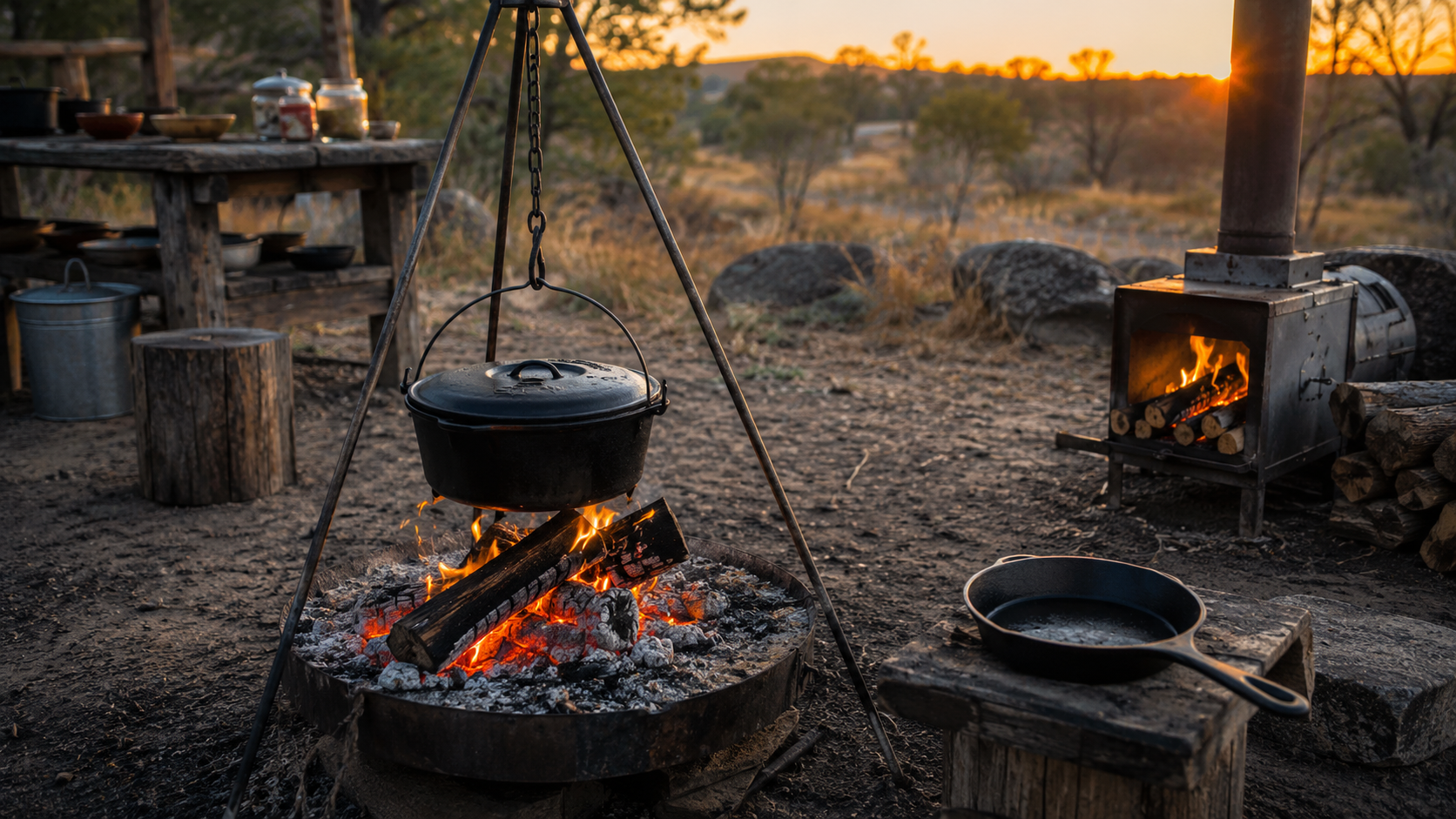
- Wood-burning stoves — dual-purpose for heat and cooking, practical mainly in cold climates where the heat output isn’t wasted, and drawing from the same seasoned firewood supply as a heating stove.
- Campfires — the most fuel-flexible option but the least efficient; most heat escapes upward rather than into the cookware.
- Solar ovens — reach roughly 200-300°F on a clear day using reflective concentration; sufficient for baking and slow cooking but not searing, and largely ineffective under cloud cover.
Cookware
Cast iron holds heat well and works on any of the sources above, including directly in coals, but weighs significantly more than steel alternatives — a 12-inch skillet typically runs 7-8 lbs. A Dutch oven with a flanged lid designed to hold coals on top enables actual baking over an open fire or wood stove, not just stewing. Stainless steel is the lighter-weight option for portability but doesn’t retain heat as evenly for slow cooking.
Food Storage Without Refrigeration
A root cellar maintained at 32-40°F and 85-95% humidity — achievable by digging into a hillside or burying a container below the frost line — keeps root vegetables and some fruits for months. Dehydrating food to below roughly 20% moisture content prevents microbial growth and extends shelf life to a year or more for most fruits and vegetables. Fermentation (typically 2-5% salt by weight for vegetables) relies on beneficial bacteria outcompeting spoilage organisms, and works well for cabbage, cucumbers, and similar high-water-content vegetables — the same preservation logic behind smoking and curing meat, just applied to produce instead of protein.
Seasonal Adjustments
Solar ovens make sense in summer specifically because they don’t add heat to a living space. Wood stoves double as a heat source in winter, making their fuel cost effectively shared between heating and cooking. A covered, ventilated outdoor cooking area handles wet weather without introducing combustion byproducts indoors — a real concern, since the CDC’s own carbon monoxide poisoning guidance specifically flags any indoor/enclosed fuel-burning device as a real risk without adequate ventilation, not a hypothetical one.
Conclusion
None of these methods replace a full kitchen on their own — they’re complementary, with each suited to a different combination of weather, available fuel, and cooking task. Building familiarity with two or three before relying on any of them exclusively avoids discovering their limitations at an inconvenient time.