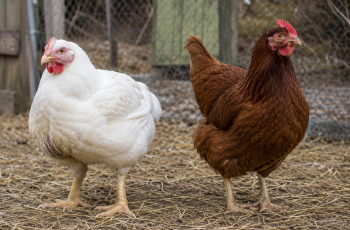
Chickens are one of the most common first additions to an off-grid property, and the usual first livestock in a homestead build-out — they convert kitchen scraps and forage into eggs and meat, produce garden-ready fertilizer, and require less infrastructure than most other livestock.
Coop Space Requirements
Standard guidance is roughly 2-3 sq ft of indoor coop space per standard-size bird, plus 8-10 sq ft of outdoor run space if the flock isn’t fully free-ranging. Overcrowding is a leading cause of stress-related problems like feather-pecking, so it’s worth erring generous rather than minimal. One nesting box per 3-4 hens is standard, and roosting bars should provide roughly 8-10 inches of linear space per bird.
Predator-Proofing
Nighttime predator pressure (raccoons, weasels, owls, and in many regions coyotes) is the leading cause of flock loss for new keepers. Hardware cloth (welded wire mesh) with openings no larger than 1/2 inch resists most predators far better than standard chicken wire, which weasels and raccoons can reach through. Any gaps at ground level, including under the coop floor, need the same protection, since digging predators exploit exactly those weak points.
Feeding and Watering
Foraging supplies some of a flock’s diet but rarely all of it — layer feed at 16-18% protein with adequate calcium remains necessary for consistent egg production. Water access needs to be constant; even a few hours without water measurably reduces laying rate. Gravity-fed waterers connected to a rainwater catchment system reduce daily manual watering, though freeze protection becomes a separate concern in winter climates.
Health Monitoring
Lethargy, a drop in egg production, or abnormal droppings are the earliest visible signs of illness in a flock, and catching them early matters since chickens instinctively mask sickness (a predator-avoidance trait) until a condition is fairly advanced. Regular coop cleaning — removing droppings and refreshing bedding on a weekly-to-biweekly cycle depending on flock size — both reduces disease pressure and produces high-nitrogen compost material for the garden.
Egg Handling
Unwashed eggs retain a natural protective coating (the “bloom”) that keeps them shelf-stable at room temperature for roughly 2-3 weeks; washing removes that coating and requires refrigeration from that point on. Refrigerated, unwashed eggs can last several months. Daily collection reduces the chance of cracking, freezing in cold weather, or a hen going broody on a full nest.
Why Egg Production Drops Every Fall, and What to Actually Expect
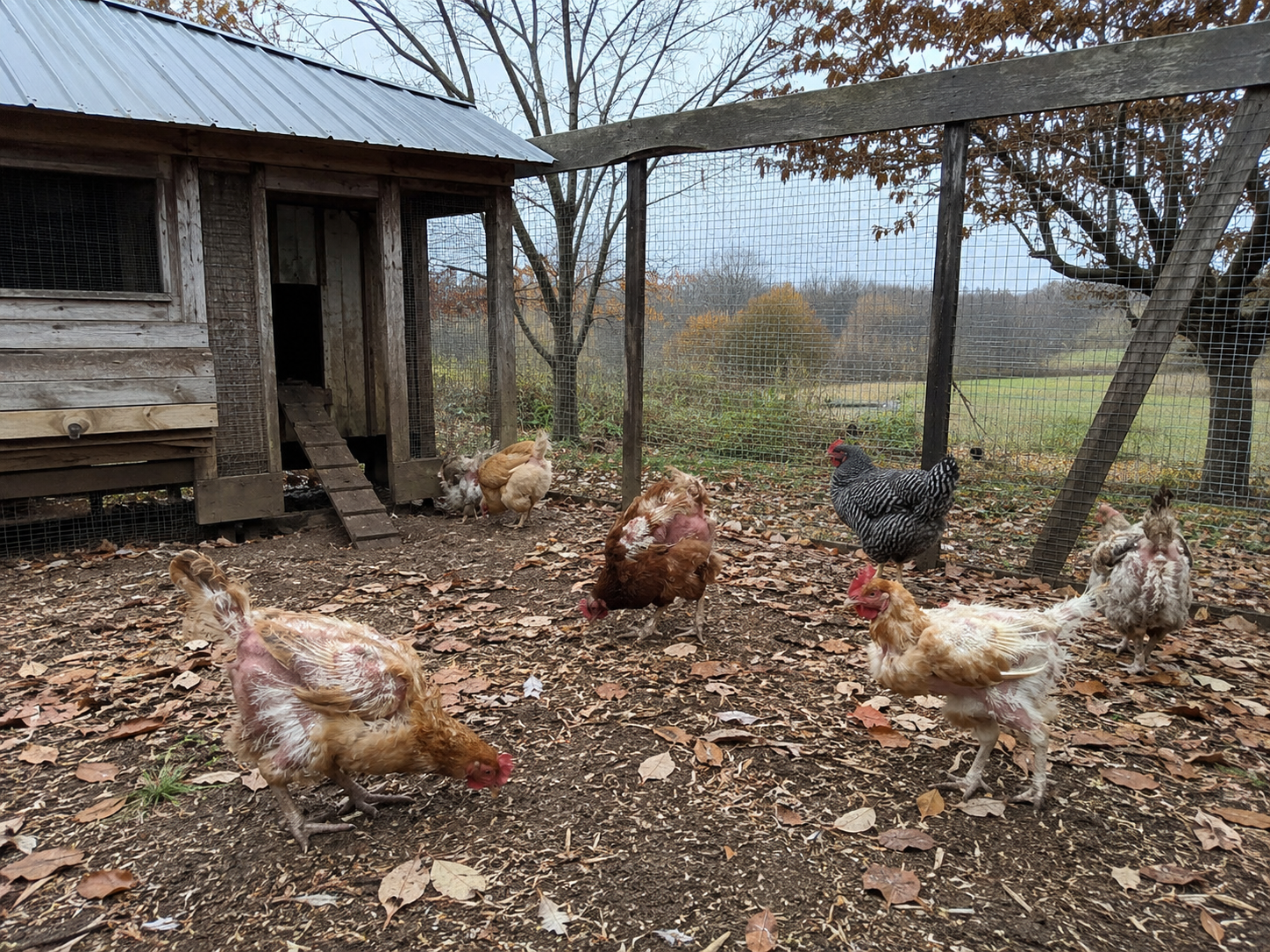
New keepers are often caught off guard the first autumn a flock stops laying, assuming something has gone wrong. It usually hasn’t — it’s the annual molt. Per Mississippi State University Extension, hens molt (shed and regrow feathers) once a year, and most stop laying entirely until the molt finishes. “Early molters” can take 4-6 months to complete it, while “late molters” — typically the more productive layers, and the ones that hold off molting the longest — shed and regrow faster, in 2-3 months. A hen putting her energy into growing a full set of new feathers has little left over for egg production, so a flock going quiet for a stretch each fall is normal, not a health problem.
The practical takeaway for an off-grid kitchen: don’t plan a winter food-preservation schedule around a flat egg-production curve. Stock up during the high-laying months and treat the molt as a predictable seasonal dip, the same way a root cellar or pantry buffers a garden’s off-season. Feed quality matters more during a molt too — the 16-18% protein layer feed already covered above is worth maintaining or even bumping slightly higher through the molt, since feather regrowth is largely a protein-driven process.
Conclusion
A well-planned coop — adequately sized, properly predator-proofed, and paired with a realistic feeding and cleaning routine — is what separates a flock that thrives from the common first-year losses new keepers experience from underestimating predator pressure or space needs.