Canned salmon is one of the more practical proteins for long-term food storage: it’s shelf-stable without refrigeration, nutrient-dense, and stores well either commercially canned or home-processed in jars — a natural next step for anyone who’s already catching their own salmon rather than buying it.
Shelf Life and Storage Conditions
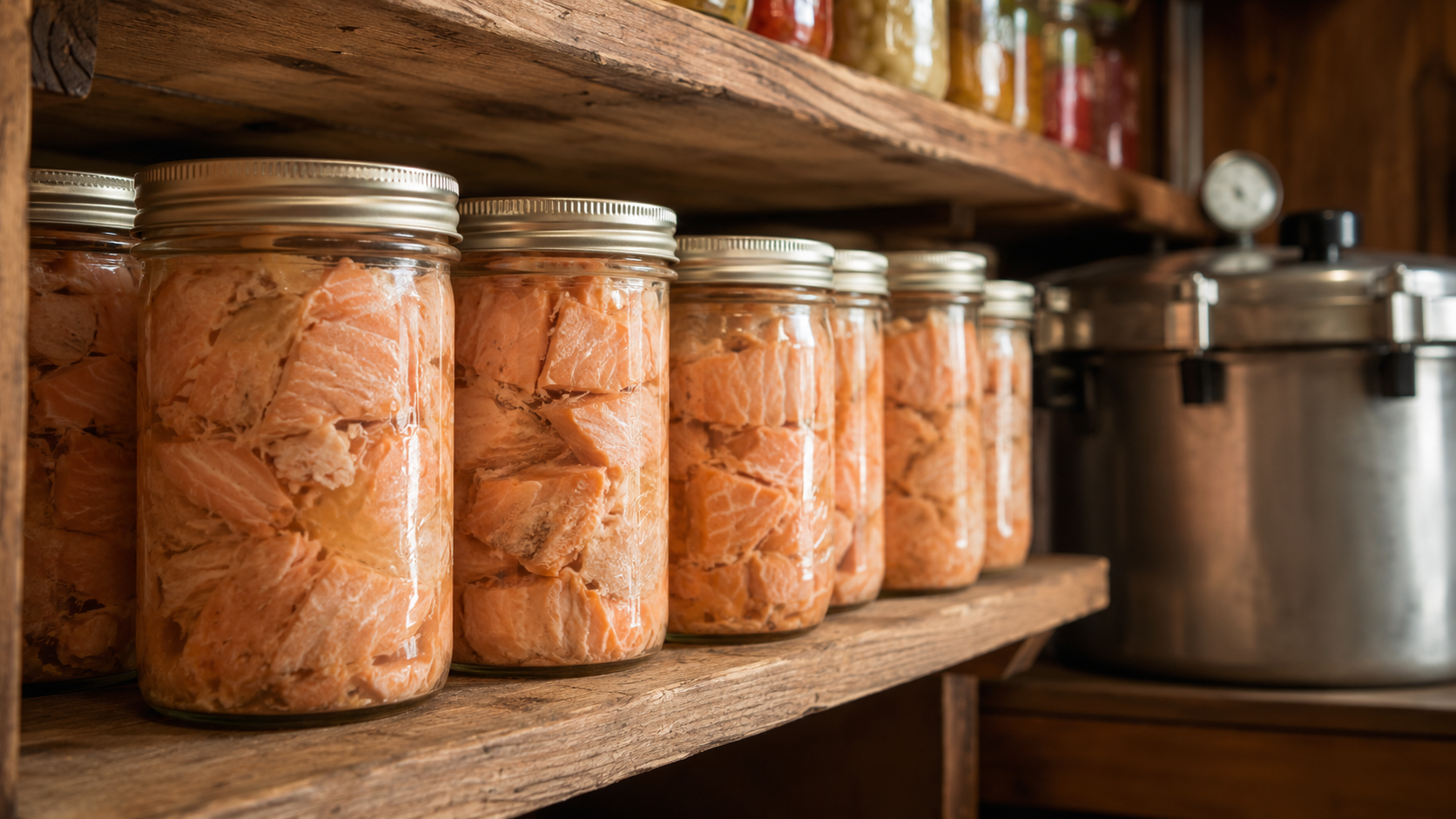
Commercially canned salmon typically holds quality for up to 5 years when stored in a cool, dry location between 50-70°F, away from direct sunlight and temperature swings. Home-canned salmon in glass jars should be pressure-canned, not water-bath canned — fish is a low-acid food, and low-acid foods processed without a pressure canner carry a real botulism risk, since water-bath canning doesn’t reach the temperature needed to kill Clostridium botulinum spores.
Nutritional Value
Canned salmon delivers high-quality protein along with omega-3 fatty acids (EPA and DHA), and when canned with the bones included (common in commercial products), it’s also a meaningful calcium source — the bones soften enough during processing to be eaten safely and provide calcium that boneless fillets don’t.
Home Canning Process
Home canning starts with clean, sterilized jars and requires a pressure canner rated for the altitude of the location being canned at, since processing time and pressure both need adjustment at elevation. The National Center for Home Food Preservation’s published salmon-canning procedure is the USDA-tested reference most experienced home canners actually follow rather than a general pressure-canning chart, since fish has its own specific processing times by jar size and pack style (raw vs. hot pack). This allows control over ingredients and salt content that commercial canning doesn’t offer, at the cost of needing the right equipment and following those tested processing times exactly — improvising on processing time or pressure with a low-acid food is where home canning becomes genuinely dangerous rather than just imprecise.
Inspection and Rotation
Cans or jars should be checked periodically for bulging lids, leaks, or damage — any of these are signs to discard the contents without tasting, since they can indicate bacterial gas production inside a compromised seal. A first-in-first-out rotation system, common in prepper and long-term storage circles, keeps the oldest stock used first and makes it easier to spot when something is approaching or past its expected shelf life. This same rotation discipline applies to any smoked or cured meat and to root-cellared produce — canning isn’t the only preservation method that needs an inventory system, just the one most people already think to track.
Conclusion
Whether commercially bought or home-processed, canned salmon’s combination of long shelf life, no refrigeration requirement, and solid nutritional profile makes it a reasonable staple for a long-term food storage plan — provided home canning specifically follows pressure-canning guidelines rather than shortcuts.