Once systems are built, the ongoing running costs of an off-grid property — fuel, maintenance, replacement parts, supplemental food — are a separate budget category from the upfront build costs, and several habits meaningfully reduce them over time.
Preventive Maintenance Over Reactive Repair
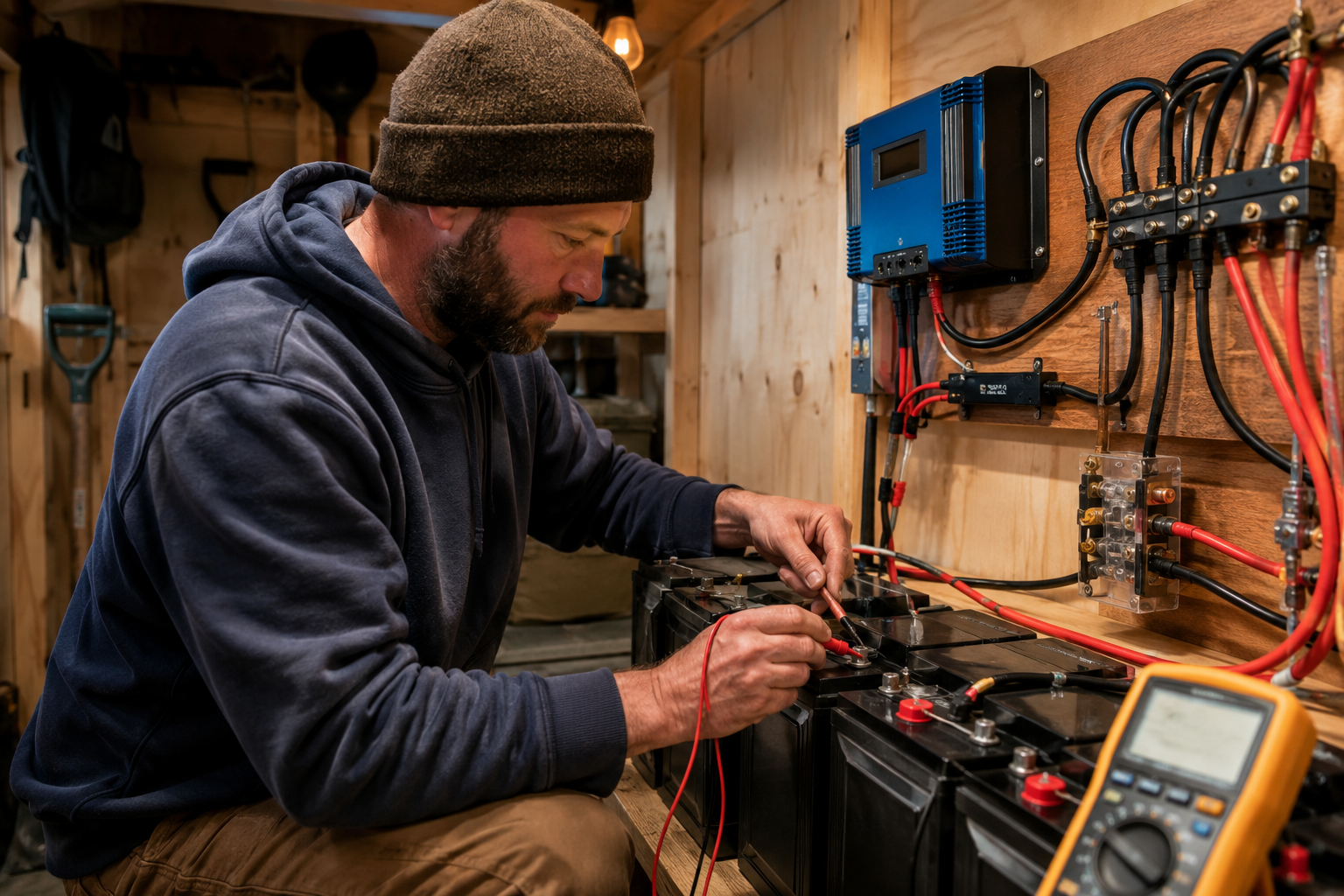
Solar panel cleaning, battery terminal maintenance, water filter replacement on schedule, and small engine servicing all cost far less than the repair or replacement bill from a neglected system failing outright. A basic maintenance calendar, tracked rather than done by memory, catches small problems (a loose connection, a clogged filter) before they cause bigger, more expensive failures.
Load Management Reduces Fuel and Wear
Running high-draw appliances during peak solar production hours, rather than drawing down battery reserves at night, reduces both battery cycling (which shortens battery lifespan over time) and generator backup runtime if one is part of the system. This is a scheduling habit, not an equipment purchase, and costs nothing to implement.
Seasonal Food Storage Reduces Grocery Dependence
A root cellar, active canning and preservation during harvest season, and a stocked pantry reduce the frequency and cost of resupply trips, which themselves carry real fuel and time cost on a remote property. This compounds with garden and livestock production once those systems mature, further reducing grocery dependence over successive seasons.
Water Conservation Reduces System Strain
Low-flow fixtures, greywater reuse for irrigation, and mulching garden beds to reduce watering frequency all reduce demand on a well or catchment system, which in turn reduces pump runtime (a real cost where pumps draw significant power) and the frequency of hauling water during dry stretches.
Buying Consumables in Bulk During Town Trips
Fuel, filters, and other recurring consumables typically cost less per unit bought in bulk, and consolidating purchases into fewer, larger town trips reduces the fuel and time cost of frequent smaller trips — a real expense that’s easy to underweight when budgeting ongoing costs.
What Battery Neglect Actually Costs
The preventive-maintenance habit above pays off most on the single most expensive component in most off-grid systems: the battery bank. A U.S. Department of Energy technology assessment puts lead-acid cycle life at roughly 300 to 1,500 cycles when regularly discharged to 80% depth of discharge, but shallower, more consistent discharge cycles — the kind good load management produces — push well past that range. In practical terms, a battery bank cycled hard every night can need replacing in 2-3 years, while the same hardware managed to stay in a shallower discharge range routinely runs 6-8 years or longer. On a bank that costs several thousand dollars to replace, that difference in service life is the single biggest lever in this whole list — bigger than any fuel-buying habit below it.
This is also where sizing at install time matters: a solar array sized with enough headroom to recharge fully most days, rather than one that leaves the bank chronically undercharged, does more for battery lifespan than any maintenance routine can make up for afterward.
Conclusion
Ongoing off-grid living costs are shaped more by maintenance habits, scheduling, and production systems reaching maturity than by any single purchase decision — the same categories (power, water, food) that dominate build costs also dominate ongoing costs, just through different levers.