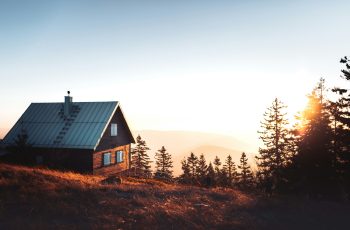
Off-grid home design mistakes tend to surface only after the fact — during the first extended cloudy stretch, the first hard freeze, or the first time a system is pushed past what it was actually sized for. Several mistakes account for most of these after-the-fact problems.
Underestimating Energy Needs
Solar systems sized to average daily use rather than peak or worst-case use (several consecutive cloudy days, winter’s shorter daylight hours) run out of stored capacity exactly when it matters most. Calculating actual watt-hour draw per device, then sizing battery storage for several days of autonomy rather than one, is what separates a system that holds up from one that fails during exactly the conditions it needs to handle.
Inadequate Water System Redundancy
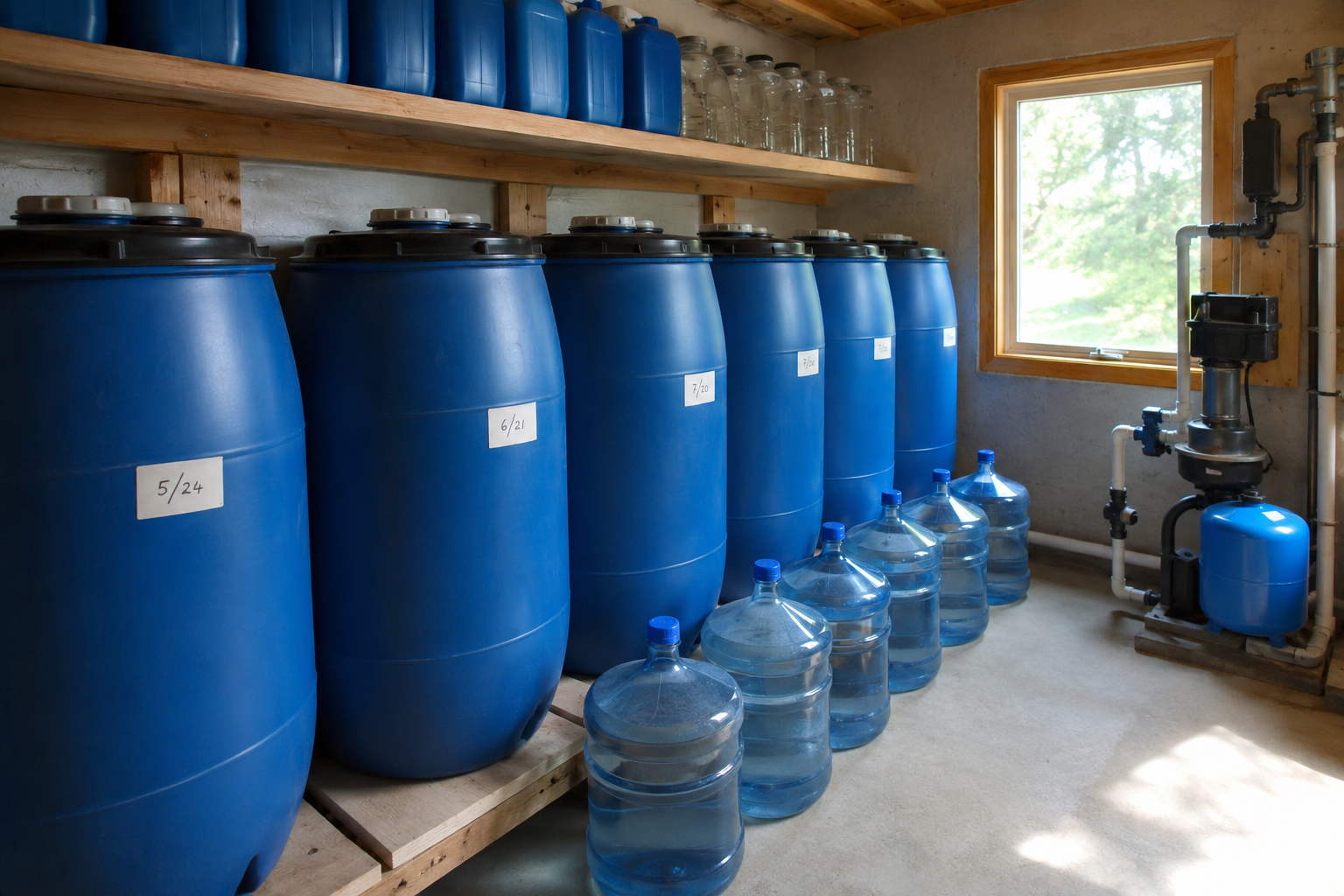
A single water source with no backup — one well, no rainwater catchment, no stored reserve — leaves a household with no fallback if that source fails or a pump breaks. A minimum stored reserve (commonly recommended at two weeks per person, using the roughly 7-13 gallons per person per day baseline for drinking, cooking, and hygiene) plus a secondary source materially reduces the risk of a single point of failure becoming a crisis.
FEMA’s Baseline Is a Floor, Not a Target
The 7-13 gallons per person per day figure above is a real-use baseline for drinking, cooking, and hygiene — a different number from the emergency-only reserve FEMA’s Ready.gov recommends for a general household: at least one gallon per person per day for several days, covering only drinking and basic sanitation. For an off-grid property, that FEMA figure is worth treating as an absolute floor for the emergency reserve specifically, not as the household’s actual daily water budget — a property fully dependent on a single well needs its stored reserve sized against real usage, not the bare-survival number a suburban household would keep for a power outage.
The gap between those two numbers is exactly why redundancy matters more here than it would for a grid-connected home: a pump failure or contaminated well on an off-grid property isn’t a several-day inconvenience solved by a grocery run, it’s the primary water source going down with no municipal backup.
Skipping Local Regulation Research
Zoning, minimum dwelling size, septic permitting, and setback requirements vary by county and can restrict or complicate an off-grid design that wasn’t checked against them before construction. Designing a home and then discovering it can’t be legally permitted as built is a costly and entirely avoidable mistake.
Poor Waste Management Planning
A composting toilet or alternative septic system chosen without confirming local legality, or sized without accounting for actual household size, creates ongoing maintenance headaches. Waste systems are one of the harder off-grid components to retrofit after construction, which makes getting the initial sizing and legal compliance right upfront more important than with most other systems.
Overlooking Communication
Cell coverage, satellite internet feasibility (which depends on a clear view of the sky), and basic emergency communication access are easy to deprioritize during design but become a real quality-of-life and safety gap once occupied — particularly relevant for medical emergencies in a remote location with limited response times.
Conclusion
Most off-grid design mistakes share a common root: sizing or planning for average conditions rather than worst-case conditions. Energy, water, waste, and communication systems all fail under stress if they were only ever designed for a typical day rather than the harder days that inevitably occur.