Beyond the basics of rainwater catchment and well drilling, several less common water collection methods extend what’s viable depending on climate and terrain. This is a catalog of collection methods specifically, distinct from the broader question of sourcing, storing, and purifying water covered in the basic survival skills guide.
1. Rainwater Harvesting
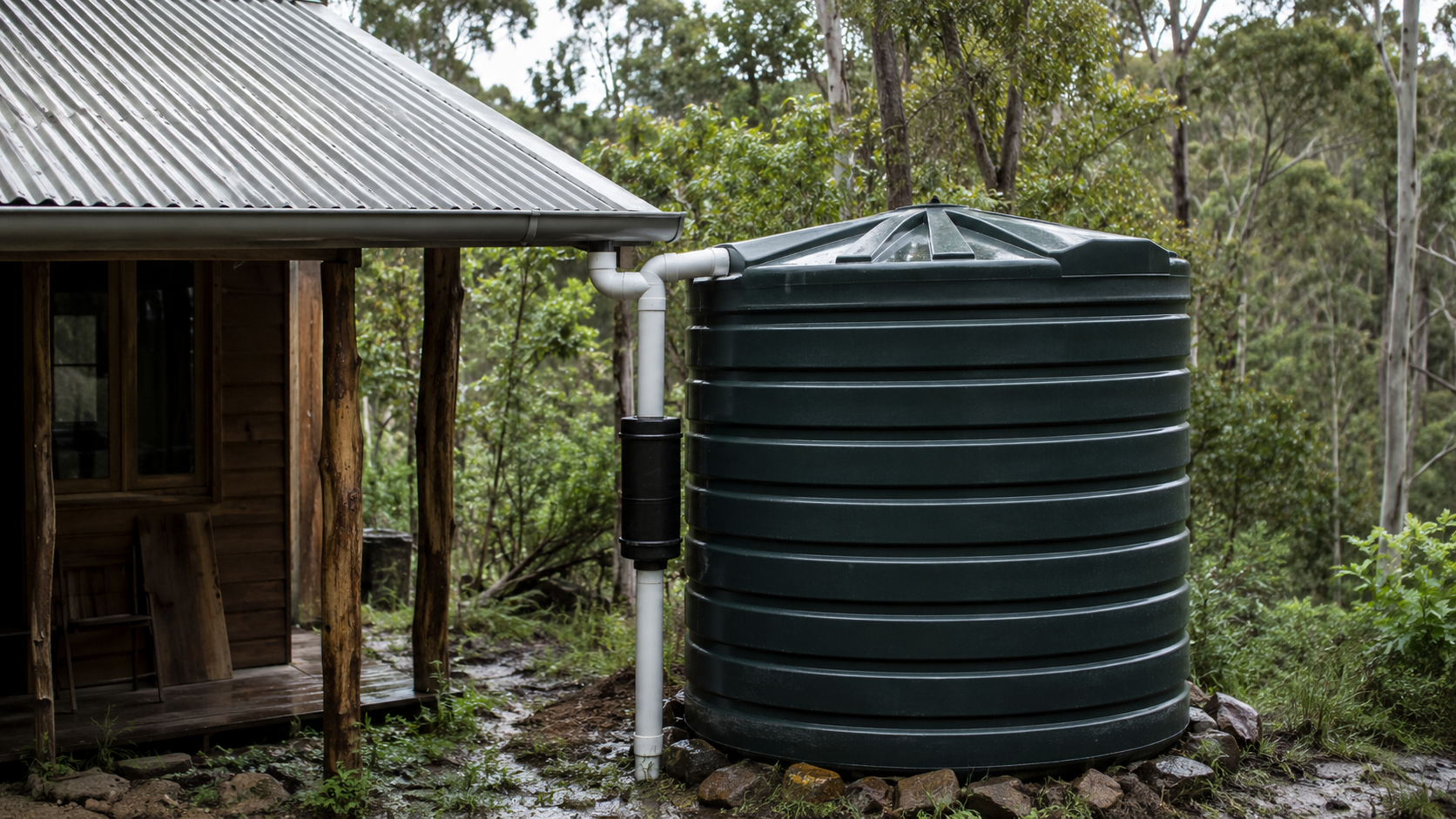
Roughly 0.6 gallons per square foot of roof per inch of rainfall, before losses — the most widely applicable method, limited mainly by roof area and regional rainfall totals. See the full system-building guide for gutter sizing, first-flush diverters, and the state-by-state legal variation that can affect how much rainwater a property is actually allowed to collect.
2. Well Drilling
Accesses groundwater directly, typically $15-45 per foot with most residential wells drilled 100-400 feet deep. Yield and water quality depend entirely on local geology, which a professional drilling assessment (not a guess) should confirm before committing to a site. The USGS’s own groundwater and wells resources are a useful independent starting point for understanding regional aquifer conditions before a drilling contractor’s quote is the only data point being relied on.
3. Surface Water
Streams, rivers, and lakes provide reliable volume where available, but carry the highest contamination risk of any source (agricultural runoff, Giardia, Cryptosporidium) and always require filtration or purification before use, never just visual clarity as a judgment of safety.
4. Fog Collection
Mesh nets positioned perpendicular to prevailing fog flow condense moisture that drips into a collection trough below — a method with real precedent in coastal and high-altitude fog-prone regions internationally, but genuinely viable only where fog is a frequent, reliable weather pattern, not an occasional occurrence.
5. Atmospheric Water Generators
These extract moisture directly from air using a refrigeration or desiccant process, and require meaningful electrical power to run — a real trade-off for an off-grid system already managing limited power generation and storage. Output scales with ambient humidity, making them far more effective in humid climates than arid ones.
6. Snowmelt
A viable seasonal source in cold climates, though melting snow for water is energy-intensive relative to the yield — roughly 10-12 inches of fresh snow melts down to about 1 inch of water, meaning large volumes of snow are needed for modest water output. This is one of several climate-specific tradeoffs covered in more depth in the guide to building off-grid in genuinely cold climates.
7. Dew Collection
Sloped, non-porous collection surfaces (metal or plastic sheeting) gather condensation overnight in climates with significant day-night temperature swings and adequate humidity. Yield is small relative to other methods and works best as a supplemental source rather than a primary one.
Redundancy, Not a Single Method
Most established off-grid properties end up running two methods, not one — typically rainwater harvesting as the primary source with a drilled well as backup for dry stretches, or vice versa depending on which is cheaper to establish on a given property. Relying on a single method with no fallback is the more common planning mistake than picking the “wrong” primary method, since even a high-yield source like a well can fail (pump issues, water table drops) at the worst possible time without a second source to fall back on.
Conclusion
Rainwater and well drilling remain the highest-yield, most broadly applicable methods for most properties. Fog collection, atmospheric generation, snowmelt, and dew collection are genuinely useful but climate- and terrain-specific — worth knowing about as supplemental or backup sources rather than assuming any one method covers year-round primary supply everywhere.