Homesteading — producing a meaningful share of a household’s own food and other needs — overlaps with off-grid living but isn’t identical to it; a homestead can be grid-connected, and an off-grid property doesn’t automatically produce food. This guide focuses specifically on the food-production and land-use side.
Land Selection for Production
Soil quality, growing season length, and water access matter more for a homestead than for a purely residential off-grid property, since they directly determine food production capacity. A soil test (roughly $20-75 through a university extension office) before committing to a property reveals whether significant amendment will be needed to support planned crops. The USDA’s own Web Soil Survey is a free starting point for a rough read on a specific parcel’s soil type and drainage before paying for a lab test.
Sequencing Food Systems
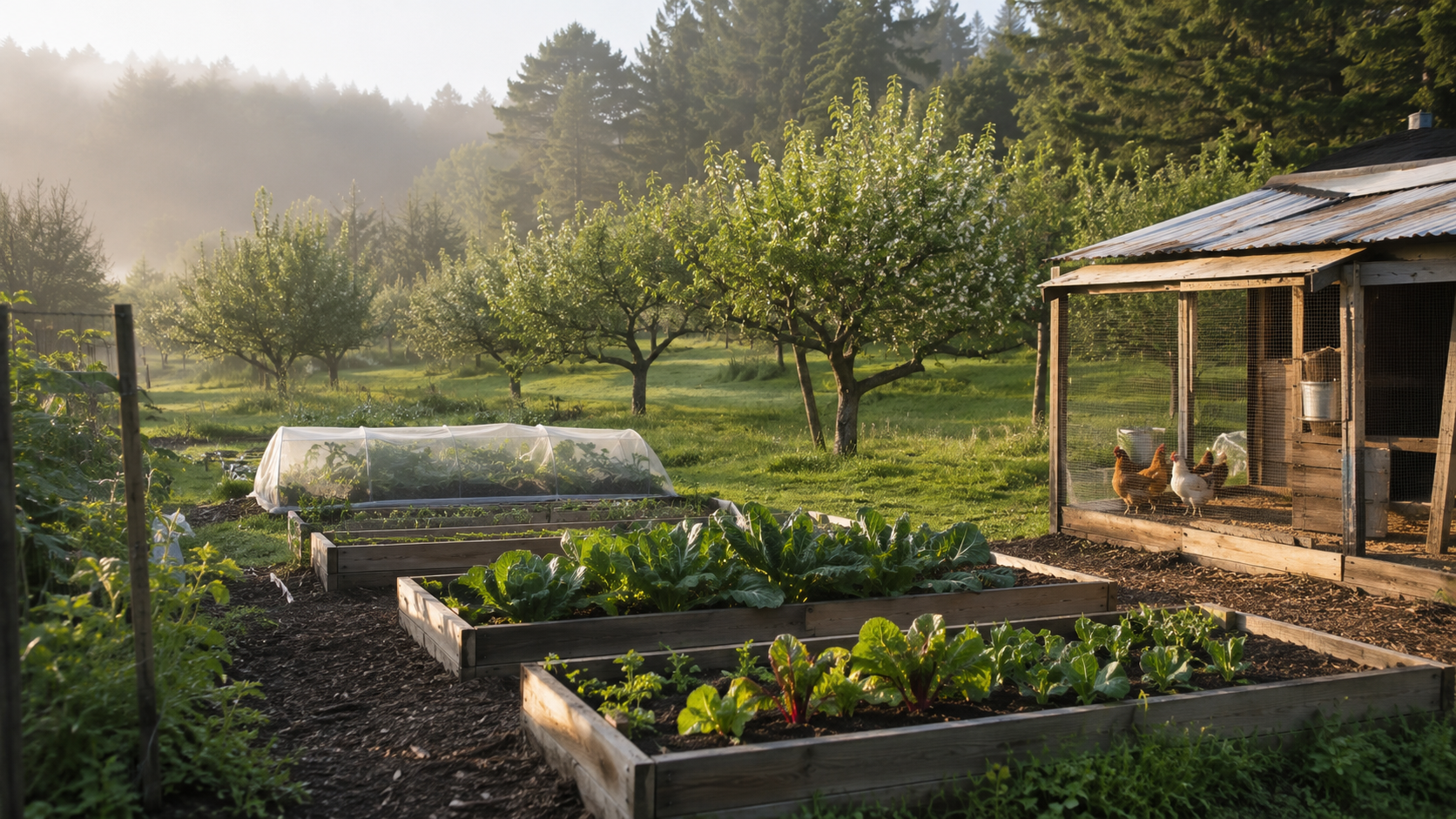
A garden started the first season won’t produce meaningfully until months in, and perennial food sources (fruit trees, berry bushes) can take several years to reach full production. Starting annual vegetables immediately while establishing perennials in parallel, rather than sequentially, shortens the overall timeline to a food-producing homestead. Working with the land rather than against it — the core idea behind permaculture design — compounds this advantage further once the basic sequencing is in place.
Livestock Sequencing
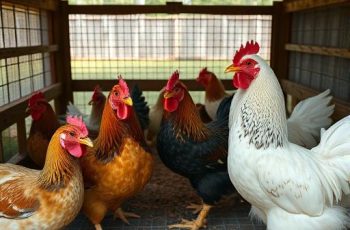
Chickens are the most common first livestock addition — relatively low infrastructure cost, fast return (eggs within months), and forgiving of beginner mistakes compared to larger animals. Larger livestock (goats, pigs, cattle) each carry meaningfully higher infrastructure requirements (fencing, shelter, feed storage) and are generally better added after a season or two of experience with smaller animals, not as a first venture.
Water for Production
Irrigation and livestock water needs add substantially to total water demand beyond household use — a garden can require hundreds of additional gallons per week during dry stretches, and livestock water needs scale with animal size and count. Sizing a water system for household use alone, without accounting for production needs, is a common homestead-specific undersizing mistake.
Skills Specific to Homesteading
Beyond general off-grid skills, homesteading specifically calls for soil management, crop rotation and pest management, animal husbandry basics, and food preservation at a scale beyond occasional home cooking. These are learnable through extension office resources, local mentorship, or hands-on practice, but they take real time to develop competency in — realistically measured in growing seasons, not weeks.
Conclusion
A productive homestead develops over multiple growing seasons, not a single year — land quality, sequenced food systems, appropriately paced livestock additions, adequate production water, and genuinely developed skills all compound over time rather than arriving at once with the initial move.