Once the planning decisions are made — water source confirmed, site evaluated, permits understood — the actual build sequence on a new off-grid property follows a fairly consistent order. This is the execution-stage checklist: what to physically build first once construction begins.
1. Access and Staging
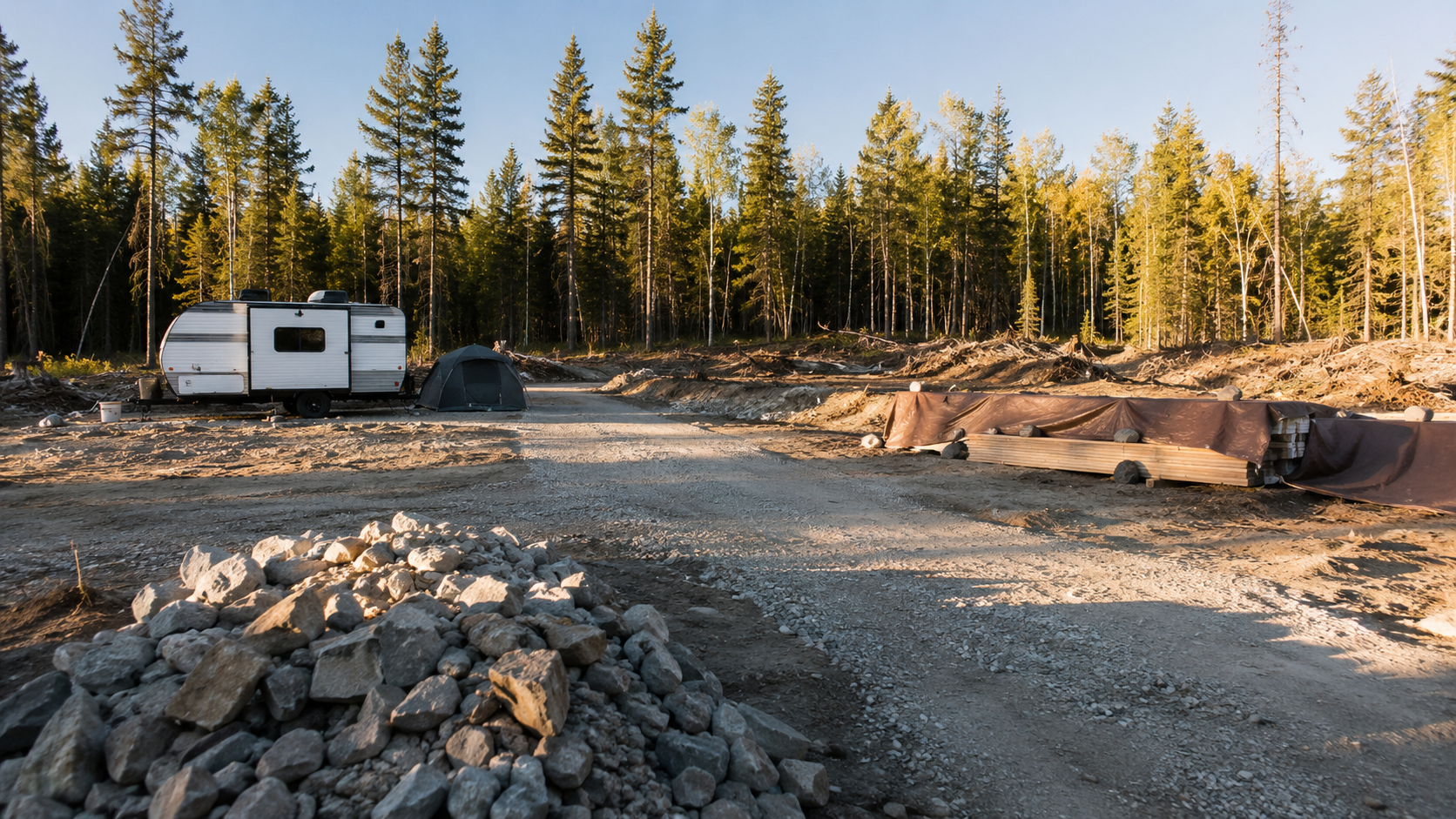
Before any structure goes up, a usable access road or path for equipment and material delivery needs to exist, along with a staging area for materials that keeps them off bare ground and protected from weather. Skipping this step is a common cause of delayed or damaged material deliveries on raw land.
2. Water System Installation
If a well is part of the plan, drilling happens early, since it can take days to weeks to schedule and complete and everything else depends on having water access during construction, not just after. Where rainwater catchment is the primary source, at minimum a temporary catchment and storage setup should be functional before extended on-site work begins.
3. Temporary Shelter
A tent, camper, small prefab structure, or similar temporary base gives a place to live and store tools during the main build, without the pressure of needing the permanent structure finished before anyone can occupy the property. This also provides a real-world test of the site’s conditions (wind exposure, drainage, sun angle) before the permanent structure’s design is finalized.
4. Basic Power
A small portable solar setup or generator covers construction-phase power needs (tools, lighting, phone charging) well before the full permanent power system is designed and installed. This staged approach also provides real usage data that helps size the eventual permanent system more accurately than an upfront estimate alone.
5. Waste Management
A composting toilet or temporary outhouse needs to be functional from the start of on-site work, not added later — this is one of the systems most often deprioritized during early construction, which creates avoidable hygiene and legal problems — the CDC’s own sanitation guidance is blunt about why: inadequate waste management is a direct disease-transmission pathway, not just a code-compliance issue, and many jurisdictions require some form of sanitation before extended occupancy is permitted.
6. Food Storage
A basic pantry setup and, once feasible, a root cellar or equivalent cool storage reduces dependence on frequent town trips during a construction phase that already demands significant time and attention elsewhere.
Conclusion
Access, water, temporary shelter, basic power, waste management, and food storage — built roughly in that order — give a livable, functional base to work from while the permanent structures and systems are developed over time, rather than trying to have everything finished before moving onto the property at all.