Cole Bennett
August 20, 2025
Once systems are built, the ongoing running costs of an off-grid property — fuel, maintenance, replacement parts, supplemental food — are a separate budget category from the upfront build costs, and several habits meaningfully reduce them over time. Routine terminal checks like this are what actually …
Cole Bennett
August 20, 2025
Before committing to an off-grid transition, a short self-assessment against a few concrete criteria is more useful than general motivation alone — it surfaces gaps in readiness while they’re still cheap to address. Financial Readiness Beyond land cost, a realistic off-grid setup (well, solar system, septic …
Cole Bennett
August 20, 2025
Four categories cover the essential systems most off-grid transitions need to address: power, water, food, and the practical skills that keep the other three running. This blueprint focuses on what each category actually requires, not just that it matters. Power Sizing starts with a real load …
Cole Bennett
August 20, 2025
Off-grid home design mistakes tend to surface only after the fact — during the first extended cloudy stretch, the first hard freeze, or the first time a system is pushed past what it was actually sized for. Several mistakes account for most of these after-the-fact problems. …
Cole Bennett
August 18, 2025
Five categories of tools cover most of the recurring work on an off-grid property: power generation, water treatment, waste management, heating, and water harvesting. Getting these right first avoids the common mistake of investing in specialized equipment before the basics are solid. Solar Power System A …
Cole Bennett
August 18, 2025
Before any construction starts on a new off-grid property, a set of planning decisions determines whether the eventual build goes smoothly or runs into expensive surprises. This is the pre-build checklist — what to evaluate and decide before breaking ground, as distinct from the actual construction …
Cole Bennett
August 18, 2025
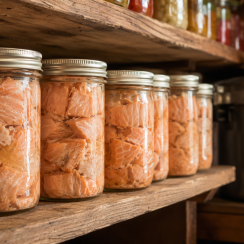
Canned salmon is one of the more practical proteins for long-term food storage: it’s shelf-stable without refrigeration, nutrient-dense, and stores well either commercially canned or home-processed in jars — a natural next step for anyone who’s already catching their own salmon rather than buying it. Shelf …
Cole Bennett
August 18, 2025
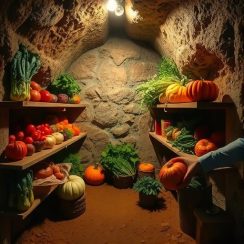
A root cellar uses the earth’s natural insulation to hold a cool, humid environment year-round without any power input, making it one of the oldest and still most energy-efficient methods of extending produce storage life. It’s also a natural second use for other underground structures on …
Cole Bennett
August 18, 2025
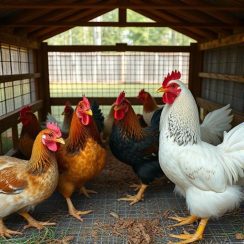
Chickens are one of the most common first additions to an off-grid property, and the usual first livestock in a homestead build-out — they convert kitchen scraps and forage into eggs and meat, produce garden-ready fertilizer, and require less infrastructure than most other livestock. Coop Space …
Cole Bennett
August 18, 2025
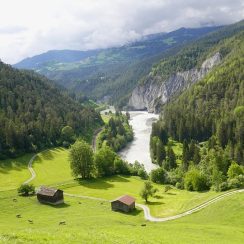
Raw off-grid land is unimproved — no power, water, septic, or road access already in place — which makes evaluation before purchase more important than for a developed property. The gaps that aren’t obvious on a walkthrough are the ones that turn into the largest post-purchase …